
Welcome to
AfterHoursIT.com
Making Technology Work For You!SM
| AfterHoursIT.com | Program Management | contact us | useful links |
|
|
Welcome to AfterHoursIT.com Making Technology Work For You!SM |
||||||
|
|||||||
|
AfterHoursIT.com provides... |
up to date News Feeds*... * Content provided by Yahoo® |
|
10/26/2026 Republicans face unexpectedly close Senate races in 4 states Trump won easily Thirty-five Senate seats are up for grabs when Americans head to the polls on Nov. 3. A key handful of them will be critical in determining whether Democrats or Republicans control the chamber next year. Republicans currently control the Senate with 53 seats. Democrats and two independents make up the Senate minority with 47 seats. In order for Democrats to take the chamber back, they’ll have to net four seats in the upcoming election. Republicans can afford to lose up to three and still be considered the Senate majority with the tie-breaking vote of Vice President JD Vance. Some of the races that were closely watched earlier this year have slid from the spotlight as the election grew near. Republicans seem to have abandoned efforts to unseat incumbent Sen. Jon Ossoff in Georgia and have pulled out of spending in North Carolina, where former Democratic Gov. Roy Cooper now seems poised to best former Republican National Committee Chair Michael Whatley to fill retiring GOP Sen. Thom Tillis' seat. As both parties prepare for the final leg of the campaign, here are some of the most closely watched Senate races.  Michigan: A bitter fight against a progressive newcomerABC News rating: Lean Democrat Republican nominee Mike Rogers is no stranger to Senate races -- the former congressmen lost his 2024 bid to now-Sen. Elissa Slotkin by less than 20,000 votes. Rogers is squaring off this time against progressive Abdul El-Sayed, a former health executive who bested a moderate candidate in the Democratic primary. Republicans have gone to great lengths to frame El-Sayed as “radical" over his support for Medicare for all and his positions on immigration. They've also attacked him for his faith and ethnicity. Rogers has falsely linked him to terrorist groups and President Donald Trump has gone as far as calling him a "vicious, violent jihadist" while urging voters to reject him to "preserve our religion, our values, and our heritage." El-Sayed, who was born to Egyptian immigrant parents in Rochester Hills, Michigan, has denied ties to terrorism and called those characterizations Islamophobic. El-Sayed told ABC News Live anchor Linsey Davis last week, "They think they can point to my name and my faith and distract us from the fact that we can't afford our gas and we can't afford our groceries." Rogers told Davis in a separate interview the he thought he was making inroads with traditionally Democratic Jewish and Black voters who are wary of El-Sayed. Michigan has voted for Trump in two of the last three elections, yet Democrats have prevailed in every Senate race since 1994.  Texas: A primary upset puts Dems in the huntABC News rating: Tossup Texans have not been represented by a Democrat in the Senate for 33 years, but Democrats say this could be the year that changes. Texas Attorney General Ken Paxton beat long-time incumbent Sen. John Cornyn in a costly GOP primary runoff thanks to Trump's late endorsement. Paxton, a hardliner and ally of the president, is seen by many Republicans as a harder sell in the general election than Cornyn would have been. Paxton has had several scandals in his time in the public eye. He was impeached in 2023 on allegations of abuse of office, bribery and corruption but was acquitted by the state Senate. He was indicted on securities fraud charges in 2015 but reached a pretrial agreement with prosecutors just weeks before trial in which he agreed to community service, legal ethics courses and pay $300,000 in restitution in return for not having to admit guilt. Just weeks before he is scheduled to go to trial on securities fraud charges stemming from theH state indictment filed against him in 2015, Paxton reaches a pretrial agreement with prosecutors to resolve the case. Paxton agrees to complete a series of actions, including doing community service, taking legal ethics courses, and paying nearly $300,000 in restitution. Not required to admit guilt, Paxton releases a statement, saying, "There will never be a conviction in this case nor am I guilty." Democrat James Talarico is a former state representative and Presbyterian seminarian. Republicans have tried to paint the 37-year-old progressive as far-left and radical. Democrats hope Paxton’s lack of favorability coupled with larger concerns about affordability could be enough to end their three-decade Senate drought. Republicans are taking no chances, pouring millions into this race and even opted to hold their inaugural midterm convention in Dallas. The race is the most expensive Senate race in history: Outside groups have contributed more than a quarter-billion dollars to elect Paxton. Over $500 million has been spent on ads in the state, according to AdImpact.  Alaska: 4 candidates, 2 Dan SullivansABC News rating: Tossup Incumbent Republican Dan Sullivan will square off against former Democratic Rep. Mary Peltola and another candidate with the same name in another surprisingly close race. Alaska’s ranked-choice voting sends the top four vote-getters in primaries to the general election. Peltola is advantaged by being the only Democrat to advance. In addition to Peltola, Sen. Sullivan faces another opponent on the ballot also named Dan Sullivan, an independent, and Republican Gerald Heikes, who made the final four when the fourth-place finisher dropped out. Republicans, including Trump, have made a point of reminding voters to check that they’re casting their ballot for the “real Dan Sullivan,” and on Oct. 23 he directed the Justice Department to preemptively sue to block certification of the results if the incumbent narrowly loses. Trump won Alaska by 13 points in 2024.  Ohio: An appointee senator vs. a former oneABC News rating: Tossup The Ohio Senate race features two candidates fighting for their chance to return to the Senate: incumbent Republican John Husted and former Sen. Sherrod Brown, who lost his 2024 re-election bid to Bernie Moreno. Husted was appointed by Ohio GOP Gov. Mike DeWine in 2025 to fill the Senate seat left vacant by Vice President JD Vance. This race will determine who finishes out the remainder of Vance’s term until 2029. This is Husted’s first time on the statewide ballot. Though Ohio has been moving increasingly toward Republicans in recent elections, Husted faces a tough race amid growing concerns about affordability and data centers in his home state. Brown lost his re-election bid against newcomer Moreno by about four points in 2024, though he outperformed Democratic nominee Kamala Harris in the state. The three-term senator is making a pitch to working-class voters concerned about cost-of-living issues.  Kansas: Challenging the GOP's lock on Senate seatABC News rating: Tossup The Kansas Senate race was not expected to be competitive -- Trump won the state by 16 points in 2024 and Republicans have held both Senate seats in Kansas for nearly a century. Yet even incumbent Republican Sen. Roger Marshall has conceded that it's “quite a close race” this cycle. Marshall, a medical doctor who served in the House before being elected to the Senate in 2020, has largely supported Trump’s policies during his time in Congress. His opponent, Adam Hamilton, has sought to emphasize Marshall’s ties to the unpopular policies that have created economic challenges for voters. Hamilton is reverend of the largest United Methodist congregation in the nation. He’s tried to brand himself as an “independent-minded” Democrat but Marshall has said Hamilton is “too woke” to represent the people of Kansas.  Maine: Can a 100-day-long campaign unseat an institution?ABC News rating: Tossup Longtime Maine Republican Sen. Susan Collins has repeatedly defied the odds, and kept her seat even after being counted out. She’s a moderate Republican who has been more willing than most in her party to break with the president on some issues. But Democrats think Troy Jackson, a former Maine Senate president and majority leader, could put an end to Collins’ nearly-30-year Senate career. Jackson was a late entry into the race after Graham Platner, the original nominee, dropped out following sexual assault allegations. Collins, the chair of the powerful Senate Appropriations Committee, has name recognition and a long record of serving Maine on her side and has tried to highlight her willingness to vote against her party. Jackson has tried to show Collins failed to when it counted -- notably, Jackson has accused her of "paving the way" for the Supreme Court to overturn Roe v. Wade by casting the deciding vote for Justice Brett Kavanaugh.  Iowa: A surprisingly competitive raceABC News rating: Tossup Trump has been rallying in Iowa to support Republican Rep. Ashley Hinson’s bid to replace retiring GOP Sen. Joni Ernst in a race that few would be competitive at the beginning of the cycle. There are no Democrats in Iowa's congressional delegation and Trump won the state by a commanding 13 points in 2024. Iowa has not elected a Democrat to the Senate since 2008. But rising costs caused by the Iran war have hit Iowa farmers hard. Many see moderate Democratic nominee Josh Turek, a state representative and two-time Paralympics gold medalist in wheelchair basketball, as a formidable candidate against Hinson. more info |
|
|
10/26/2026 U.S. military ready to strike Iran within 96 hours if Trump gives the order  US forces in the Middle East are prepared to launch new, potentially major, military operations against Iran “within 96 hours of receiving” an order from President Donald Trump, according to two US officials. Sufficient forces are now deployed in the region to carry out the potential attacks, the sources said. The scope of new US military operations would likely go beyond efforts to simply “mow the lawn” or maintain the status quo by striking radars, launchers and other Iranian assets that can be quickly reconstituted — as has been the case since Trump halted full combat operations earlier this year, the sources added. “It will be a big effort,” one of the officials told CNN. That view has been echoed by other current and former US officials familiar with internal military planning discussions — some of whom say it is a question of when, not if, Trump will issue a go-order. They believe it could come any time before the end of the year, though most likely after the US midterm elections. US officials acknowledge challenges, cite potential threatIranian forces are now more familiar with US tactics, and it would therefore be harder for the American military to effectively destroy all potential intended targets. However, leaders in US Central Command and the Pentagon have been developing a wide-ranging target list, which includes Iranian energy infrastructure, military sites and nuclear facilities. Officials say that Trump has not made up his mind on what he will do after the midterms but that he appears to be leaning toward ordering major action. But officials also caution that Trump has appeared in the past to lean toward certain actions only to back off at the last moment. The White House declined to comment. A senior Pentagon official told CNN in a statement, “The Department is a planning organization, and its job is to develop and execute military options ordered by the President.” Recent US intelligence assessments indicate Iran and Houthi rebels are taking the possibility of renewed attacks by the US and potentially Israel very seriously, according to two additional sources familiar with the matter. If the US and Israel launch new military operations against Iran, Tehran and the Houthis would likely retaliate immediately by targeting American personnel and facilities around the region — and potentially beyond, the sources familiar with those recent US intelligence assessments said. An unclassified October 23 memo from Director of National Intelligence Jay Clayton to Secretary of State Marco Rubio says US intelligence has found that “Iran has substantially increased efforts to target US personnel” and plotting efforts “have reached advanced stages in both the Middle East and certain other countries,” CNN previously reported. US intelligence officials believe Iran and the Houthis are unlikely to carry out preemptive escalatory attacks against American personnel or Israel at this point but would not hesitate to respond if Iran is targeted first by US or Israeli forces, one of the sources familiar with the latest American intelligence assessments noted.  But the regional threat posed by Iran and the Houthis is one reason why the US is expected to continue quietly pulling personnel from its embassies across the Middle East in the coming days, the source said. While the US Embassy in Riyadh, Saudi Arabia, is the only American diplomatic facility in the region under ordered departure, one of the sources told CNN that others are expected to receive similar directives and those that do not will be scaled down under a personnel cap. Additionally, nonessential US military personnel who were expected to deploy to the Middle East as part of the next troop rotation have been told they are no longer being sent, according to a US official, underscoring the possibility of looming regional escalation. Adm. Brad Cooper, the CENTCOM commander, visited the Strait of Hormuz on Sunday as the US military maintains its blockade on Iranian ports and assists shipping traffic through the critical waterway. Cooper “observed the current operational environment” while flying over the strait in a helicopter, CENTCOM said, adding that he met with service members who cleared the waterway of Iranian mines. “We continue to stand shoulder to shoulder with our Gulf partners and the shipping industry,” Cooper said in a news release. “This visit underscores our strong commitment to continued freedom of navigation through the Strait of Hormuz.” Despite the increase in tankers transiting the strait, oil prices remain high, partly due to the threat of possible Iranian attacks. One US official acknowledged the status quo around the strait is “untenable” for the long term, and barring a last-minute diplomatic breakthrough, is one reason Trump may turn to military action — despite questions about whether the White House has a broader strategy for ending the conflict. Israel pushing for more strikesIsraeli Prime Minister Benjamin Netanyahu has been pushing to carry out new attacks against Iran, but US officials have requested he delay until the Trump administration is ready to conduct joint operations, according to two US officials and an Israeli security source. “Netanyahu really wanted and tried to convince Trump for a joint attack in Iran before the elections, and Trump did not give a green light,” the Israeli security source told CNN. The prime minister’s office said this was “fake news.” One reason Trump declined is because Israel Defense Forces chief of staff Eyal Zamir told US Gen. Dan Caine, chairman of the Joint Chiefs, that it would harm the elections in Israel and lead to their postponement, the Israeli security source added. Israel’s Channel 12 News reported Sunday there was an “unprecedented” confrontation between Zamir and Netanyahu fewer than 48 hours before Tuesday’s vote. According to the report, Zamir received a directive from the political echelon related to Iran but requested an in-depth discussion and legal authorizations before carrying it out, fearing the action could lead to a miscalculation that could trigger an immediate conflict. Defense Minister Israel Katz said the report was “completely baseless and false.”  Israel was preparing for the possibility of launching additional attacks against Iran in the last week or so and had been lobbying US officials to support and complement those new strikes, a third source briefed on the matter told CNN. But senior US officials — including Trump — told Israel to hold off, instead signaling the two countries would launch joint operations soon. Israel appears to have delayed plans in the immediate term for additional strikes but is building up for potential joint operations with the US — likely after the American midterm elections, all of the sources said. Israel seemed to agree to delaying new strikes on Iran in part because it needs US support for missile defense, the source briefed on the matter added. Iran and the Houthis would likely retaliate against an attack and Israel’s defensive munitions have been strained during the war. Recent US intelligence assessments indicate that Netanyahu and his allies still lack a clear strategic objective beyond demonstrating some sort of “progress” and continuing to degrade the Iranian regime, one of the sources familiar with the reports added. Netanyahu said this week in a speech at an IDF graduation ceremony that his directive to the IDF, the Mossad and other security branches is to topple the regime in Iran. “The plans are ready, waiting for Trump’s approval, could be after the midterms,” the same source told CNN. This story has been updated with additional developments Monday. CNN’s Kevin Liptak contributed to this report. For more CNN news and newsletters create an account at CNN.com This article originally appeared on CNN at https://www.cnn.com/2026/10/26/politics/us-iran-strike-plans-trumpmore info |
|
|
10/25/2026 U.S. judge barred his deportation to Mali. A Texas dad says he ended up there anyway. From thousands of miles away, a Texas dad, hiding in a country he doesn't know, reminded his son to vacuum the carpet each week. Moussa Diawara is from Mali, but spent nearly half his life living in the United States, where he married, had two U.S. citizen children, worked and paid taxes. U.S. Immigration and Customs Enforcement deported him to Ghana over the summer. Diawara has no connection to Ghana, but a judge had issued an order that he couldn't be deported to Mali, because it was likely he'd be persecuted there. Diawara said that within days of his arrival in Ghana, local officials forced him onto a flight to Mali. "I still say to myself, 'This isn't real,'" Diawara said. Third-country deportations are a reality for many as President Trump's administration seeks to carry out the largest deportation in U.S. history. When the U.S. government decides an immigrant can't stay in the U.S., and can't be sent to their home country, it can send them to a third country. A 60 Minutes investigation found that some of the third countries accepting deportees from the U.S. are routinely sending them back to the very countries they fled — locations where U.S. immigration judges ruled they would likely be persecuted or tortured. What happened to Moussa DiawaraDiawara, 57, came to the U.S. on a tourist visa when he was 32. He overstayed that visa, and later applied for refugee protection, arguing he would be persecuted if he were to return to Mali. Diawara had converted to Christianity, and Mali's a Muslim-majority nation with an Islamist insurgency. He has no criminal record.  In 2012, a U.S. immigration judge ruled that Diawara could not be deported to Mali, but the U.S. could find a safe alternative if it ever wanted to remove him from the country. As a result of the ruling, Diawara was able to get a U.S. work permit. He worked as an Uber driver and was finishing a night shift on July 11 of this year when he found ICE agents waiting for him at the suburban Houston home where he lived with his wife and children, who are U.S. citizens. Diawara spent three weeks in ICE detention in Texas, unable to speak to his lawyer or a judge. He was loaded onto a plane and deported to Ghana, a country he never visited or had any ties to, on July 31. In Ghana, Diawara said he and others were detained in a hotel by armed guards and were not allowed to make phone calls. "I cannot call my wife, I can't contact my lawyer. I can't talk to no one," Diawara said. "I tell them, 'This is kidnapping. You guys kidnapped us.'" 60 Minutes first got in touch with Diawara in August. At the time, he was homeless and hiding in Mali, fearing for his safety after Ghanaian officials dropped him there with no money or identification. He was able to escape to another country with the help of some local truckers after several weeks in Mali. Diawara asked for the country to not be disclosed out of concern for his safety. Diawara acknowledged that the U.S. had a right to deport him, but not to Mali. And he believes the U.S. knew Ghana would send him there. U.S. officials gave him a medical document on the flight to Ghana with the destination listed as "SHRC Mali" — SHRC stands for Special High Risk Charter, referring to the kind of flight Diawara was on. "So they know 100% I'm going to Mali," Diawara said. Both of his bag tags, issued by the Department of Homeland Security (DHS), also list the destination as Mali. "Well, he wasn't flown to Mali," said James Percival, DHS's top lawyer. "He was flown to Ghana, but I can't speak to why that piece of paper says that." A DHS spokesperson later followed up with a statement, saying the bag tags were "produced by contractors" who "are not part of the process that determines...the destination." The medication form, the statement said, was a "clerical error." Ghana's government declined to comment. DHS says Ghana had provided the U.S. with "diplomatic assurances" for Diawara's safety. The agency also questioned the credibility of Diawara's arguments for fearing persecution in Mali. Democrats and immigration attorney critique third-country deportationsPast administrations rarely deported people in Diawara's situation. But as part of the Trump administration's mass deportation operation, ICE has deported 25,000 people to dozens of third countries that, in return, receive millions of dollars in aid or other benefits from the U.S. government. A judge's ruling that someone can be deported, but not to their home country, is called "withholding of removal." Diawara had this protection, and so did dozens of others on his deportation flight, 60 Minutes found. There were 63 people on Diawara's third-country deportation flight, which left Texas on July 30, and stopped in Sierra Leone and the Central African Republic before landing in Ghana. Seventeen of the 19 people 60 Minutes reached who were deported to Ghana said they were subsequently sent, against their will, to countries U.S. immigration judges had ruled they should not be returned to, including Niger, Mali, Nigeria, Gambia and Guinea. Immigration attorney Meredyth Yoon said she believes there's no way U.S. officials don't know what Ghana is doing to the people the U.S. deports there. She said the U.S. government was warned about Ghana's conduct in a lawsuit last year. Despite this, the U.S. sent 10 more third-country deportation flights to Ghana. Yoon believes it's a violation of international law. A 30-page report from Senate Foreign Relations Committee Democrats, commissioned by ranking member Sen. Jeanne Shaheen (D-NH), slammed the administration's third-country deportation program, critiquing it as costly and saying it undermined U.S. interests. "Through its third country deportation deals, the Trump administration is putting millions of taxpayer dollars into the hands of foreign governments, while turning a blind eye to the human costs and potentially undermining our diplomatic relationships," Shaheen said in a February press release. Homeland Security lawyer says third-country deportations are widely misunderstoodPercival, DHS's top lawyer, said he's not aware of any cases of Ghana sending people on to other countries against their will. He argued that third-country deportations are widely misunderstood.  Asked whether he thinks people sent to third countries are then voluntarily going back to the places they fled, Percival said, "Either they would choose to go home, and they might not always be truthful about the fact that they consented, so that's one possibility. The other possibility is that the foreign government applied their own procedures and, consistent with international law, determined that it was acceptable to return them home." Video footage released last year shows Ghanaian officials dragging Rabbiatu Kuyateh, a nurse who lived in the U.S. for 30 years, to a flight back to her native Sierra Leone. She, like Diawara, had a withholding of removal order from the U.S. stating she couldn't be deported to her home country because she would likely be persecuted there. Ghana isn't the only country accused of sending deportees to countries that U.S. immigration judges ruled they should not be deported to. When deportees arrive in Sierra Leone, they often get a pamphlet that says, "Sierra Leone is serving as a temporary transit location while arrangements are made to return you to your country of origin." Percival said there is a public safety threat associated with "this population of aliens" and added that "every administration before President Trump absolutely abdicated their responsibility to the American people by letting criminals back on the street and doing no diplomatic efforts to get these people out of our country." He says third countries like Eswatini and South Sudan have agreed to accept deportees with criminal records for first-degree murder, sexual assault, kidnapping, and armed robbery when their home countries refused to take them back. Percival said he did not know what percentage of people who had been detained and deported were violent offenders. Of the 63 people on Diawara's flight, 19% of the passengers had been charged with or convicted of crimes, including theft, assault, drugs or weapons possession. A 60 Minutes review found the other deportees either had a traffic violation (19%), or no criminal record at all (62%). "This administration is following the law that Congress has passed. There are a lot of people in this population that we talk about who committed very serious crimes," Percival said. "And people should be very happy with President Trump for getting these serious criminals out of the country." Last month, a federal appeals court upheld a ruling in a class action lawsuit that found the Trump administration's third-country policy was unlawful because it denied deportees due process. But the Supreme Court has allowed these deportations to continue until it hears the case in December. Diawara fighting to get back to his family in the U.S.Moussa Diawara's attorney, Reuben S. Kerben, has asked a federal judge in Washington, D.C., to order that he be returned to the U.S.  Meanwhile in Texas, Diawara's wife Barbara, a registered nurse, is waiting for him, along with their two children. Their son Corey is 16, and their daughter Chloe is 12. "It feels really empty without him," Corey said. He worries about his mom now. "I'm trying, you know, not to cry in front of them, to be strong for them," Barbara said, "because they need me." This article originally appeared on CBS News at https://www.cbsnews.com/news/moussa-diawara-third-country-deportation-ghana-mali-60-minutes/more info |
|
|
10/25/2026 Trump's DOJ told a judge how to rule. Then it pulled her from court mid-hearing. THE JUDGE HAD JUST CALLED COURT TO ORDER on that winter morning, and already, a dozen attorneys waited on her TV screen, each with an urgent request. Their clients, all locked up and facing deportation, needed hearing dates scheduled or bond requests considered. As always, the judge had prepared for every case days earlier, because almost nothing happened in Courtroom 15 that she didn’t anticipate. Then the door behind her swung open, thudding against the wall. In walked her supervisor. “Are you on the record?” he asked, questioning whether she was in session. Karen Donoso Stevens was in session, and she was certain he knew it. The judge held up a finger - wait - as she announced a recess inside the Annandale Immigration Court. A Homeland Security attorney at the prosecution table watched in silence, as did her legal assistant. She drew a long breath, then stood in the black robe she’d worn for nearly a decade, its cloth fraying at the elbow. Here we go, the judge thought, certain she was about to be fired. In the hallway, she recalled, her supervisor said he’d been instructed to pull her from court. “Why?” she asked. “I don’t know,” he replied. It was Jan. 14, one year into the most tumultuous period in the U.S. immigration court’s history. President Donald Trump had inherited what was widely seen as a broken system. Exacerbated by an influx of migrants under President Joe Biden, its backlog exceeded 4 million unresolved cases, and Trump’s administration had vowed to address it. The public broadly supported tighter border security before his election, though the aggressive crackdown that followed alienated many voters, recent polls show. As the administration stripped protections from asylum seekers and dispatched thousands of ICE agents onto American streets, leading to more detentions and deportations, two U.S. citizens were killed by federal officers in Minneapolis, igniting a backlash. But no cog in Trump’s effort to expel millions of “illegal aliens” was more essential - and less familiar to the public - than the immigration courts that decide who stays and who goes. The sprawling system doesn’t operate like most courts. It exists within the Justice Department, which is overseen by the attorney general and, ultimately, the president. Nevertheless, it is obligated to afford migrants due process and manage cases according to the law, nothing else. And yet, in the first year of Trump’s second term, the Justice Department fired some 100 of the country’s roughly 700 immigration judges and began to replace them with what the administration called “deportation judges.” Donoso Stevens, 53, should have been insulated from the institutional chaos, according to fellow judges and attorneys whose cases she oversaw. Before joining the bench in 2016, she’d spent a decade at Homeland Security, earning a reputation as a formidable prosecutor. She was Annandale’s most tenured “detained judge,” one of three who decided what to do with migrants in custody, the court’s highest-stakes cases. Every year, Donoso Stevens had denied asylum in more than half the applications that came before her, a record consistently in line with national averages. She hadn’t resisted case quotas imposed by the first Trump administration and seldom took sick leave. She never fell behind on her docket. But on that morning in Northern Virginia, she feared none of it mattered. By then, Donoso Stevens said, another supervisor had already ordered her to reverse four rulings at the direction of unidentified “higher-ups,” a violation of judicial authority she once considered inconceivable. The interference, she said, had only escalated since. The allegations, which she’s sharing publicly for the first time because of her deep concern for the court’s integrity, were corroborated by her extensive contemporaneous notes as well as colleagues, family and private attorneys interviewed by The Washington Post. They contradict Trump officials’ insistence to the public and to The Post that - as required by law - immigration judges serve under the administration as independent arbiters of justice. Outside her courtroom, Donoso Stevens tried to make sense of what was happening. She would remain on the bench but no longer oversee cases for migrants in detention, she was told by Robert K. Lundberg, Annandale’s acting assistant chief immigration judge, a largely administrative role he’d been moved into a week earlier. Donoso Stevens asked if she could finish the hearing. He said no, she recalled: “You’re not allowed to go back and say what happened.” The judge returned to court and turned on her camera. “I’ve been told I’m no longer able to finish these hearings,” she said, her voice quavering. On the video call, she heard attorneys gasp. Then the judge walked out. Word spread through the legal community within minutes. Many assumed she’d been fired. Back in the hallway, Donoso Stevens saw Lundberg escorting her replacement, a man she’d trained and mentored, toward her courtroom. He immediately took over her docket, including a prominent case that legal experts had said could set a precedent with sweeping consequences for tens of thousands of Afghans seeking refuge in the United States. Donoso Stevens returned to her office and removed her robe. She wept. In the hours that followed, colleagues and friends tried to console her. At least, they said, she still had a job. But the judge, who so often preached that her only duty was to follow the law, asked herself: What would she have to do to keep it? DONOSO STEVENS BEGAN TO WORRY, she said, on the 26th day of Trump’s second term. She was in the car with her husband, headed home from a Valentine’s Day dinner, when her phone buzzed, then kept buzzing. “No way,” Donoso Stevens blurted as she read the texts. Her supervisor, Rebecca Walters, had been fired, one of seven assistant chief immigration judges dismissed that day. Appointed under Biden, Walters was credited with dramatically improving Annandale’s case-completion numbers, an achievement that colleagues hoped would ingratiate her with a Trump administration that had imposed quotas during his first term. Dozens of other terminations soon followed, spotlighting what many legal experts have called a systemic flaw in the court system: Unlike federal judges protected from political retaliation by lifetime tenures and the constitutional separation of powers, immigration judges work for the executive branch. No administration had ever carried out a purge at this scale. Trump officials asserted they had every right to banish, as the White House put it, “activist judges who slow-walked deportations and granted asylum at sky-high rates.” But even as the expulsions instilled what surviving judges in private conversation began to call a “culture of intimidation,” the Justice Department insisted it would not interfere with their rulings. “They are required to adjudicate cases independently and impartially without favor to either party,” Sirce E. Owen, appointed under Trump as acting director of the Executive Office for Immigration Review, wrote in a memo last summer. Owen declared that no one in the executive office, the agency that oversees the entire immigration court system, can “direct any adjudicator to rule in a particular way” before appeals are settled. Donoso Stevens wanted that to be true, because the institution had become central to her identity. She’d endured a two-year application process before being appointed to the bench a decade earlier by Democratic Attorney General Loretta E. Lynch. The job was the zenith of her career and, she thought, its destination. She found purpose in studying the law and applying it, even if that meant ordering the deportation of people whose pleas for sanctuary devastated her. She’d believed in the sanctity of America’s legal system since well before she swore an oath to the Constitution. Donoso Stevens decided to become an attorney when she read “To Kill a Mockingbird” as a high school junior. The ideals of truth and justice appealed to her, as did getting paid to persuade people she was right. The middle child of Ecuadorian immigrants in the Chicago suburbs, she’d always served as her siblings’ advocate, negotiating punishments and bedtimes. When she turned 17, her dad ordered a vanity plate for the pickup they shared: “2 B LWYR.” She met her eventual husband, Damon Stevens, when they competed against each other in moot court at Michigan State University College of Law. She won. “She’s got an edge,” he said, recalling how her diminutive stature, at 5-foot-3, could mislead. “If you’re opposing her, she’s not a wallflower.” After graduation, Donoso Stevens prosecuted misdemeanor assaults and DUIs in a Chicago criminal court until she followed her husband to California, where he’d been stationed as a judge advocate in the Marine Corps. Amid cross-country moves, she had two kids and worked at a nonprofit to help children who’d arrived in the U.S. without their parents. In 2007, she joined Homeland Security as a prosecutor. “I remember how proud I was to be a federal employee,” said Donoso Stevens, whose parents had instilled a deep allegiance to the country that gave them citizenship. “I never saw myself doing the law for money.” She was especially tenacious in trying to deport immigrants accused of domestic violence or harming kids, according to defense lawyers, who noted they never found her unreasonable. “She was agreeable when there was room to agree,” said Anam Petit, then a private attorney who later served as a judge before being fired without cause last year. “She was always thoughtful.” In liberal Washington, Donoso Stevens knew that many people considered her job distasteful because it often meant fighting to deny immigrants a home in the United States. Weary of being asked how she could sleep at night, she stopped revealing what she did for a living. “I work for the government,” she’d say, and nothing more. Back then, she said, Homeland Security attorneys weren’t evaluated on wins and losses. If immigrants proved they deserved asylum, she didn’t fight them. Ricky Malik once represented an attorney from El Salvador whose family had been terrorized after the woman investigated gang members. In court, Donoso Stevens confirmed the story, then told the judge that Homeland Security did not oppose her application. “Justice, that was her main goal,” Malik said. “Not just, ‘I’m going to win every case, and I’m going to have a body count.’” Still, when she was appointed to the bench, at the time an uncommon transition for a Homeland Security attorney, Malik and other defense lawyers protested. How, they asked, could she rule with impartiality when former colleagues sat at the prosecution table? “This is unfair,” he said, before she began overseeing his cases. As the years passed, Malik said, he found in her what he wanted most from every judge: She followed the law. HOW TO FOLLOW THE LAW got more complicated on a Friday afternoon in September 2025. In a 14-page ruling, the Board of Immigration Appeals, stocked with members appointed under Trump, stripped judges of a power they had exercised for decades. Undocumented immigrants who weren’t apprehended until after they entered the country had long been allowed to request bond, leaving judges to decide whether it was safe to release them as their cases proceeded. Suddenly, the board decided that anyone who came unlawfully should remain jailed, even those with clean records and family ties. Donoso Stevens disagreed with the board’s legal interpretation, but her view, she said, made no difference. She treated its decisions as the mandates they are. Still, she and other judges quickly spotted a potentially critical omission: The opinion failed to account for children who came to the United States without a parent or guardian and had since reached adulthood, a group that, in their view, fell under distinct legal guidelines. Less than two weeks later, four such people asked Donoso Stevens to release them. She studied the law and consulted with colleagues, then decided the immigrants were eligible. She granted bonds. On Sept. 17, Annandale’s then-acting assistant chief, Eric Dillow, called her. “Dillow ... said bond is a hot topic. Wanted to discuss bond decisions,” Donoso Stevens jotted in a green steno pad reviewed by The Post. He told her he knew about the four cases and had just emailed her a separate ruling that, he believed, meant she could have denied bond. When Donoso Stevens pressed him, she said, Dillow acknowledged the four cases had been “elevated” to him. He didn’t say by whom, and she neglected to ask. Nevertheless, it was a stunning disclosure. As far as she knew, none of her rulings had ever been reported to a supervisor. She hung up and read the ruling Dillow had sent, then he called back. From her office, Donoso Stevens told him she could see the merits of the argument, even though it came from a federal court in New York that couldn’t require her or any other immigration judge in Virginia to follow it. “What should we do?” he asked. She told him Homeland Security should follow legal protocol: The department could either file a motion asking her to reconsider or request that the appellate board intervene. He agreed, according to her notes, but called back a few minutes later. Suspicious, she allowed another judge who had come to her office to listen in. “He said higher-ups said I had to vacate my decs sua sponte,” Donoso Stevens wrote in a note that abbreviated “decisions” and used a Latin phrase that refers to judges reversing their own rulings unprompted. Dillow did not name the “higher-ups.” Donoso Stevens pushed for an explanation: “Why can’t DHS file a motion to reconsider?” “Oh no,” he replied. “They’re not going to do that.” The call ended. “Is this our red line?” Donoso Stevens asked the other judge. The colleague, to whom The Post granted anonymity because they fear professional retaliation, confirmed the details of the call. To Donoso Stevens, Dillow had not only told her how to rule, directly violating the executive office’s vow of judicial independence, he’d implied that Homeland Security had ordered the court system to acquiesce. The Post described the allegation to three legal experts, and all of them condemned it as unacceptable. “It’s an example of direct interference in an immigration judge’s handling of a case,” said Jill E. Family, a professor at Widener University Commonwealth Law School. “That is a very disturbing affront on the basic norms of our legal system.” The Post sent a detailed list of questions to the Justice Department and Homeland Security as well as Dillow, Lundberg and every other government official Donoso Stevens named in her account of what happened. None responded to the allegations. “DOJ’s approach is to impartially adjudicate cases as efficiently as possible in accordance with the law and evidence,” an executive office spokesperson wrote in a statement. “It does not view adjudications in terms of outcomes and does not have a stake in any particular outcome.” Donoso Stevens said she considered refusing Dillow’s order to overturn her rulings. But because she conceded that the New York case offered a reasonable counterargument, the judge reluctantly agreed to reverse herself, she said, a choice she still debates. A week later, after backlash over a push to rapidly dismiss cases and expedite arrests, the executive office insisted again that the court had total independence. It issued a memo that appeared in conflict with Dillow’s edict: No one in its leadership “may direct an Immigration Judge to decide a case in a particular way.” But in private, leadership continued to undermine its public pronouncements. On Nov. 18, Teresa L. Riley, appointed under Trump to lead the country’s entire immigration court system, emailed Donoso Stevens, demanding justification for why she’d granted bond in six other cases. Donoso Stevens said she couldn’t provide the message to The Post because of pending litigation, but she described it. When Dillow called to discuss Riley’s email, Donoso Stevens told him she hadn’t acted unilaterally. Federal courts had ordered bond hearings in all six of her cases, in response to habeas corpus petitions challenging the government’s legal right to keep migrants locked up. Dillow told Donoso Stevens he understood, she said, and promised to convey her account to his bosses. Riley, who didn’t reply to a request for comment, never followed up with Donoso Stevens. The bond issue seemed to recede until early January, when Lundberg replaced Dillow as Annandale’s acting assistant chief. Within a day or two, Lundberg appeared in her office doorway. “Judge, just because habeas hearings are ordered doesn’t mean you have to grant bond,” she said he told her. Donoso Stevens interpreted that as an instruction to conduct “show” hearings, she said, where the outcomes for immigrants would be predetermined. “If bond is warranted - if they prove they’re not a danger or a flight risk - then I’m going to grant bond,” the judge said she told him. He looked at her, she said, and walked away, silent. Less than a week later, he opened the door to her courtroom and asked if she was on the record. NEWS OF DONOSO STEVENS’S DEMOTION stunned private lawyers and dismayed fellow judges, but the most immediate effects fell on the immigrants who would have appeared before her. Since the start of Trump’s second presidency, Donoso Stevens had denied about 85 percent of her asylum claims, according to a Post analysis of Justice Department data. She largely ascribed the highest rate of her career to how much more difficult the board’s mandates made it to approve applications. Her replacement, Richard VanVeldhuisen, who joined the bench in 2023 and had never overseen a docket of detained immigrants, denied about 95 percent in his new assignment. His rate mirrors the court’s soaring national averages in 2026. While the board’s decrees are limiting, legal experts say, judges have succumbed to immense pressure from the Trump administration to deny applications. “It is a hurricane-force wind against judicial independence,” said Dana Leigh Marks, a former immigration judge who, since retiring after 35 years, has become a fierce Trump critic. “Everybody has a different tolerance point.” The effects have been profound. The most high-profile asylum case VanVeldhuisen inherited from Donoso Stevens was that of an Afghan who, after supporting the United States’ cause in his home country, escaped with his wife on a U.S. military plane as American troops withdrew in 2021. In July of last year, ICE officers arrested the man, whom The Post is identifying as H out of concern for his safety, on his way to work at an accounting firm. In court, Homeland Security attorneys argued to Donoso Stevens that H, who has never been charged with a crime, could be safely sent back, despite the Taliban’s brutal regime. If the courts accepted that rationale, legal experts suspected it could help the agency expel thousands of other Afghans. Homeland Security later submitted surprise evidence: an unsigned FBI memo that accused H of no wrongdoing but described him as “a potential threat” because of distant relatives who were associated with terrorist groups. Donoso Stevens pressed the prosecutor for more details on the memo, but he provided none, saying his “chain of command” had given it to him. Donoso Stevens can’t share how she would have ruled, she said, but there were signs in court that she found the government’s case unconvincing, noting that H, who’d answered hundreds of questions under oath, had not “testified to anything that would make him a national security interest.” After Homeland Security announced the FBI had yet to finish his background check, a frustrated Donoso Stevens acknowledged that, by law, she didn’t have the option to grant the father of two asylum until he was cleared by the bureau, which the Justice Department also oversees. A prosecutor reminded the judge she could reject H’s application at any time. She declined. The clearance arrived three months later, in January - just nine days after Donoso Stevens was removed from the case. On Feb. 18, VanVeldhuisen, who had never consulted with her about it or held a hearing on H’s case, ordered him to be sent back to Afghanistan. The judge wrote that because of H’s relatives, he “may pose a danger to the national security.” In a footnote, VanVeldhuisen, who did not respond to a request for comment, mentioned that the judge “formerly assigned to this case is unavailable to complete” it. Donoso Stevens remained on the bench, in a courtroom not far from his own. H’s attorney filed a habeas corpus petition to the Eastern District of Virginia, but a Trump-appointed judge denied it, citing, among other things, VanVeldhuisen’s conclusion that H may be a danger, “which this Court cannot second-guess.” OVER AND OVER, TRUMP OFFICIALS have demanded more productivity from immigration judges. His first administration asserted that “efficient adjudication” served “the national interest” and instituted quotas. His second administration has set strict case-completion deadlines “to address the substantial backlog exacerbated by prior leadership.” “No more endless delays,” the White House declared. “Only results.” Donoso Stevens believed in results, too. That’s what so infuriated her one February morning after her demotion when she discovered seven white cardboard boxes outside her chambers. The executive office had instructed judges to rule on 95 percent of their motions within 30 days. Now, beside her door, she found more than 100 of VanVeldhuisen’s unresolved filings - all from Homeland Security and all at least six months old. Donoso Stevens struggled to understand how ignoring the government’s legal requests served its own goal of “efficient adjudication.” And she was suddenly responsible for every one of them. “This is f---ing unbelievable,” she said to herself. Donoso Stevens, who, in her new role, had already taken on about a thousand asylum applications from immigrants not in detention, demanded an explanation from Lundberg’s staff. When none came, she requested a meeting. The judge pitched him on ways to make Annandale more efficient, she said, but the discussion in early March, which included other administrators, quickly turned combative. “So you’re basically telling me all the things I’ve done wrong,” she recalled him snapping. Donoso Stevens left the meeting shaken and angry. On March 6, in an email she read parts of to The Post, the judge followed up on their discussion. “Annandale Immigration Court and the broader EOIR,” she wrote, “are understandably and correctly under significant pressure from DOJ and the American people to be as efficient as possible in significantly reducing the longstanding backlog of cases.” She created a spreadsheet for every outstanding motion and, over two months, cleared them all. On April 20, Lundberg signed her performance review, grading her “satisfactory,” the highest possible rating. In the accompanying email, she said, he thanked her for her work on the motions. The same day, she wrote in her notes, he stopped her in the hallway: “Said I was doing a great job completing cases.” On May 21, Donoso Stevens hurried out of the courthouse just after lunch for a doctor’s appointment. A mammogram had spotted a mass, and she needed another test to determine whether she had cancer. Regardless of the diagnosis, she intended to head back to court for an afternoon hearing. After the scan, she was sent to a waiting room while a doctor studied the result. There, in her gown, she noticed a text from Lundberg. “Good afternoon. The EOIR Director forwarded to me the Notice of Termination that you received this morning,” he wrote at 2:35 p.m. “I looked for you but you had left the court.” Donoso Stevens had never seen an email. “I don’t know what you are talking about,” she replied. Then the doctor called her in: She didn’t have cancer. On her drive back to court, she realized the Trump administration had fired her nine months before she would have become eligible for her pension. Lundberg met her in the lobby. He refused to let her inside. ONE THURSDAY MORNING LAST MONTH, Donoso Stevens made a vanilla latte and settled onto her living room couch. Wearing a sweatshirt and yoga pants, she tried to talk her husband into a shopping trip, because she had little else to do. Her black robe sat folded in a bedroom dresser. Then her phone started to vibrate. The U.S. Court of Appeals for the 4th Circuit, which has jurisdiction over Annandale’s cases, had rejected the administration’s legal argument to deny bond hearings to every immigrant who entered the country unlawfully. “Holy s---,” she said. It was the latest in a series of 11 federal appellate courts that had weighed in on the bond question, nine of them deciding against the government. The Supreme Court is expected to settle it by June, but as the appeals have plodded through the system, thousands of migrants have agreed to leave the country rather than wait behind bars. For Donoso Stevens, the September ruling affirmed her resolve to hold bona fide bond hearings, despite the pressure not to. As she read the 86-page decision, the texts popping up on her phone all delivered a version of the same message: You were right. Former colleagues praised the principled commitment they suspected had cost Donoso Stevens her career. Lundberg never provided a reason for her dismissal. Like most judges, her termination letter cited “Article II of the Constitution,” a reference to the executive branch’s powers. “EOIR continually evaluates all immigration judges, regardless of background, on factors such as conduct, impartiality/bias, adherence to the law, productivity/performance, and professionalism,” a spokesperson wrote in a statement that noted the executive office doesn’t comment on personnel matters, “to include a disgruntled former employee’s allegations against the agency.” Donoso Stevens wouldn’t speculate on her firing because she’s appealed it, making her one of at least a dozen former immigration judges across the country who argue they were unlawfully dismissed. A federal appeals court in D.C. will soon hear oral arguments on the central case hers could hinge on, but ultimately, the Supreme Court may settle that issue as well. In the meantime, legal experts say the Justice Department’s transformation of the immigration court has set a precedent that could upend the system each time a new president takes office: more mass firings, more ideological hirings, more pressure to appease whoever is in charge. Democrats in both the Senate and House have introduced bills that would remove the court from the executive branch, affording it true independence, but without Republican support, the legislation has little chance of passage. “We were public servants, and I feel like something was taken from me, something that I loved,” Donoso Stevens said. “The argument the administration is making is that, under Article II, we can be fired for any reason. And if we allow that, then we are basically becoming de facto political appointees.” FIVE WEEKS LATER, H, the Afghan denied asylum by Donoso Stevens’s replacement, returned to immigration court. The U.S. government - the same one that had worked for months to deny immigrants like him bond - had requested a hearing to decide whether he should be released. It didn’t say why. H’s attorney, Justice Haynes, suspected Homeland Security wanted to preempt any new habeas petitions prompted by the 4th Circuit’s bond decision. By then, H, 30, had lost faith in the American legal system. He couldn’t bear what would happen to his children in Afghanistan if he were sent back, but the stress of staying, and fighting, was so intense his hair had begun to fall out. His brother, a delivery driver who had served as an interpreter for the U.S. Army, struggled to cover a mortgage while he supported two families. H’s wife quit her English classes and had to visit local food banks every week. His daughter, 4, had stopped asking when her dad would come home. Now H, eyes bloodshot and baggy, watched on a video screen as one of his attorneys argued that, after 15 months in ICE detention, he should be released while his appeals proceed. The lawyer reviewed his clean record, professional résumé, community support, love for his kids and devotion to his new country. Then, from the prosecutor’s table, a Homeland Security attorney reminded the court of the ruling from VanVeldhuisen, who had decided in February that H was a national security risk. If not for that decision, the judge acknowledged, she would release him. “But I can’t undo what another judge already found,” she said. “My hands are really tied.” So she denied bond. As H returned to his cell, he once more imagined how differently his life might have unfolded if the case had been decided all those months ago by Donoso Stevens. “I think the first judge I had,” H said later, “she was a victim of this politics.” “She was fair,” he added, because she had listened to his story and scrutinized the facts and challenged the government, as he always thought judges in America were supposed to do. He’s been told it could take another year for the courts to decide whether to let him go back to his family, or send him to the Taliban. Emmanuel Martinez contributed to this report. Related Content This article originally appeared on Washington Post at https://washingtonpost.com/nation/2026/10/25/how-respected-us-immigration-judge-lost-her-job-under-trump/more info |
|
|
10/26/2026 AI giant Anthropic publicly files for listing on the U.S. stock market Anthropic (ANTH.PVT) publicly filed its S-1 investor prospectus on Monday, ahead of its planned initial public offering later this fall under the ticker symbol “ANT.” The AI lab, helmed by CEO Dario Amodei, has exploded in popularity thanks to its Claude Code AI coding tool and Claude Cowork enterprise offering. As of May, Anthropic was valued at $965 billion, more than rival OpenAI's (OPAI.PVT) $852 billion valuation in March. Anthropic's S-1 provides potential investors with their first look at the company's financials, including how much it's spending on capital expenditures related to AI chips and data center leases, as well as how much revenue it's bringing in and what its largest sources are. The AI lab has faced a number of controversies this year, including a run-in with the Trump administration over how the government can use the company's AI models, and current and former employees warning about the potential threat of killer AI. Though experts say those fears are overblown. more info |
|
|
10/26/2026 Spurned by Trump, these outgoing Republicans aren't helping their potential successors Republicans spurned by President Donald Trump aren't interested in rescuing their would-be replacements. Instead, a growing number of retiring or ousted GOP incumbents from Nevada to North Carolina are sitting those races out, and in some cases, openly bucking their own party. Outgoing Sen. John Cornyn has raised money for various Republican Senate candidates — just not for Texas Attorney General Ken Paxton, who ousted him in the primary with support from Trump. He's been vocal for months about what he sees as Paxton's vulnerabilities and how Democrats could flip Texas blue for the first time in decades. North Carolina Sen. Thom Tillis — who has frequently criticized some of Trump's Cabinet and broken with the White House on policy — has played little role in the campaign of former RNC Chair Michael Whatley, Trump's hand-picked Senate candidate. The distance between the two Republicans is particularly notable as Whatley struggles to close the gap against Democrat Roy Cooper. Rep. Mark Amodei has repeatedly criticized, and now openly rejected voting for, the GOP nominee to replace him, David Flippo. "The bedwetting from outgoing moderate Republicans will define their legacy and only help socialists get elected," said David McIntosh, president of the Trump-aligned Club for Growth, which has endorsed Flippo and Paxton. "People like John Cornyn and Mark Amodei need to get on board and support Republican nominees and stop posturing for an MSNOW contract." But other Republicans defended their colleagues: "I never would question the loyalty to the party of Thom Tillis or John Cornyn. Both of them have contributed immensely to our party and our party's successes in the past and I suspect will be going forward," said North Dakota GOP Sen. Kevin Cramer. "But I also don't begrudge them for their opinions and their right to be open about them." These outgoing Republicans, several of whom were explicitly pushed out by Trump or persuaded to retire given his hold on the GOP, are using the midterms as a test: whether the party will demand loyalty to the president or can return to a pre-Trump era. "What [Trump's] done is created a coalition that, in my opinion, will not stay with Republicans once we go back to traditional Republican platform priorities," Tillis said in a recent interview with POLITICO. "A lot of the elements of the populism that Trump created to expand a base that made him successful running for president, I don't think that stays with the party long-term." Some of those intraparty frustrations are starting to boil over, with Trump loyalist candidates and outgoing Republicans swiping at one another as Election Day barrels closer and the party's overall fortunes look dire. The blame game is especially prominent in some of the Senate battlegrounds where Republicans have begun to quietly retreat in the final stretch of the midterms. Tillis never followed through on his offers to help Whatley by reaching out to holdout donors in the North Carolina Senate race, said one person familiar with the campaign who was granted anonymity to speak candidly about internal matters. "He was never part of our strategy because ... I mean, if he could have been helpful to us, then he could have ran," the person said, referring to Tillis' decision not to seek reelection last year. "The Tillis of the past year ain't the same guy who worked overtime to help elect Republican majorities here in NC back in 2010." One person with knowledge of Tillis and North Carolina politics, also granted anonymity to speak candidly, countered that the outgoing GOP senator "doesn't help sure winners or sure losers" and "Whatley has been a sure loser throughout 2026, running as Donald Trump's 'guy,' and making zero effort to build his own brand." "All Whatley had to do was to keep this race competitive, but instead the party is facing a potential wipeout. This is an embarrassing effort by a former RNC chairman who only has himself and his consultants to blame for the completely avoidable beat down coming on Nov. 3," the person added. Spokespeople for Tillis did not respond to a request for comment. Whatley's campaign declined to comment. Natalie Baldassarre, a spokesperson for the Republican National Committee, touted the president's endorsement record in a statement. More pointedly, she said that "Republicans who chose not to help elect other Republicans may as well be helping Democrats." The White House did not respond to a request for comment. While the dynamic is less pronounced on the House side — Reps. Don Bacon and Elise Stefanik have been helpful to the Republicans running to replace them — there's a clear exception: Amodei. Flippo, who's trying to replace him, has dealt with a host of scandals, from stolen valor accusations to carpetbagging to campaign finance issues, but Trump's endorsement helped boost him through the Republican primary in June. Top Republican outside groups, including Club for Growth, have poured millions into his race in Nevada's 2nd District to rescue a seat the president won by 14 points in 2024. Amodei said in an interview that whoever was advising Trump to jump in and endorse Flippo gave "awful advice." "The only criteria shouldn't be, 'Well, they're the Republican,'" said Amodei, who cast his ballot for a third-party candidate this week. "I mean, politics is a team sport. But when a member of the team turns out to be this way, clearly this is not a bright and shining moment for the vetting process." Asked about Club for Growth president McIntosh's criticism of moderate "bedwetting," Amodei scoffed: "At least this crowd is absolutely consistent. Forget fundamental factual and character messes that campaigns won't and can't respond to; and attempt to change the focus to party loyalty," the retiring representative said. "Let me know when Club For Growth does a statement on campaign finance compliance, stolen Valor, and individual background transparency." Even as figures like Cornyn and Amodei catch the fury of more Trump-aligned Republican forces for not falling behind the party line, that doesn't mean they're abandoning fellow Republicans overall. Cornyn has raised more than $1.1 million at events in Dallas and Houston last month for the campaigns of Sens. Susan Collins of Maine, Jon Husted of Ohio and Dan Sullivan of Alaska — as well as for the National Republican Senatorial Committee and other Senate candidates: Iowa Rep. Ashley Hinson, former Michigan Rep. Mike Rogers and former New Hampshire Sen. John Sununu, according to a person familiar with the senator's political operation who was granted anonymity to discuss private events. He still clearly and explicitly draws a line against helping Paxton, telling reporters earlier this year, "Everything I said about him in the primary is true." A spokesperson for Paxton did not respond to a request for comment. In Georgia, popular GOP Gov. Brian Kemp has been all-in on the governor's race for Republican Rick Jackson — but he's been comparatively quieter when it comes to Rep. Mike Collins' Senate campaign to oust Democrat Jon Ossoff. The governor had initially recruited, backed and supported a different candidate in the GOP primary, though he's since helped the Collins campaign with a public endorsement and by headlining a major fundraiser in Atlanta and others. Still, some Collins allies want the governor to be more involved. "Brian Kemp is someone who needs to be on the trail and someone who needs to help if Republicans are going to win," said one GOP strategist working on races in Georgia who supports Collins and was granted anonymity to discuss internal dynamics. "But he did create some of this mess with the primary he ran against Mike who we all knew would be the nominee." Meyer Sigfried, a Collins spokesperson, in a statement dismissed any suggestion that Kemp isn't fully supporting Collins: "He's been on the trail rallying Georgians to get out and vote early for Mike and Republicans up and down the ballot, and his help behind the scenes has been just as important." A representative for Kemp referred POLITICO to Collins' statement of support. Across the map, other frustrated Republicans have more directly pointed the finger at Trump for his interference, lambasting the president's tendency to prop up candidates whom they deem too weak for the role. In South Carolina, Rep. Ralph Norman said this week he has refused to campaign with Sen. Darline Graham, who defeated him in the primary with Trump's help. Graham has been under scrutiny for her lack of experience in elected office. Republicans still expect her to win in deep-red South Carolina, but they've also made late investments to shore up her campaign as Democrat Annie Andrews dominates in fundraising. Norman blamed the president, saying, "What he did to South Carolina … it's just not right," but added he will still vote for Graham. T.W. Arrighi, a spokesperson for Graham, thanked the representative for his support in a statement, before hammering other Republicans — like Norman's son, Warren Norman — who will not be voting for the GOP nominee: "It is unconscionable for anyone who claims to be a conservative in South Carolina to not vote straight ticket Republican and therefore endorse a Chuck Schumer-led Senate." In many cases, GOP lawmakers are defending their disgruntled colleagues who have decided not to help Trump-picked candidates. "Folks have to follow their conscience. If a guy 'smells bad' then I wouldn't," said Bacon, who is supporting Brinker Harding, an Omaha city councilmember, in the race to replace him in his blue-leaning Nebraska district. "I like Brinker. He's a good person."A "I believe we all ought to do all we can to help the good guys win the election," Cramer added. "But I also understand people that ... feel aggrieved and want to maybe not be as enthusiastic about that as I am." Mia McCarthy, Meredith Lee Hill and Aaron Pellish contributed to this report. This article originally appeared on Politico at https://www.yahoo.com/news/politics/articles/spurned-trump-outgoing-republicans-aren-084500902.htmlmore info |
|
|
10/26/2026 Nicki Minaj doubles down on Trump support at rally for Republicans in Michigan Rapper Nicki Minaj doubled down on her support for President Donald Trump during a Republican campaign rally in Michigan on Sunday, telling the president she would back him again if he ever sought another term. Minaj was invited onstage at the Port Huron rally by Trump, who was campaigning for Republican Senate candidate Mike Rogers and gubernatorial candidate John James. "President Trump, it is an honor to stand with you every single time," Minaj said. "And I will continue to support you forever and ever. If you run again, I will support you again." Trump, who is serving his second term, is barred by the 22nd Amendment from being elected president to a third term. Trump Brushes Off Reporter Question About Running For Third Term In 2028: 'The Law Is Very Strong'  The Grammy-nominated hip-hop star has increasingly voiced support for the president and recently served as a celebrity judge for the Small Business Administration on the Small Business Administration's Million Dollar Pitch Competition, serving as one of the celebrity judges. "I am so honored to be working with this president. He represents resilience," Minaj told the crowd. "Since he's come back, he's changed the energy of our country. And he's given us a future to look forward to, a brighter future for us and our children." She added, "I love him so much." Minaj also urged support for Republican candidates ahead of the midterm elections, as the party seeks victories in two major Michigan races. She described the upcoming vote as a "major turning point for our country." Nicki Minaj Offers Career Advice To Young Americans, Delivers Blunt Response To Trump Critics  "We really need all of these great people to be elected," Minaj said. Minaj also addressed transgender-related issues involving children. "We don't want our children to be bombarded with sex changes, right?" Minaj said. "We don't want that for our children. We want people to leave the children alone. Leave them out of it." Trump introduced Minaj as the "queen of rap" before joking that he did not like someone stealing the spotlight. "I don't like being overshadowed," Trump quipped. "And this woman overshadows me, and I'm angry about it."  As the crowd cheered her on, the president observed, "They're going crazy over her." After Minaj wrapped up her remarks, Trump praised her again, saying, "You see why everybody likes Nicki." "She is a very, very special person. She gets it." Minaj's appearance on the campaign trail comes after the "Super Bass" and "Starships" singer recently said in a Fox News interview with Lara Trump that young Americans should participate in the midterms and urged them to "vote red now." White House communications director Steven Cheung also weighed in on Minaj's growing political involvement, the next White House press secretary in a post on X. Click Here To Download The Fox News App  "Ladies and gentlemen, I think we may have found the new White House press secretary! @NICKIMINAJ," he posted on X. Original article source: Nicki Minaj pledges to support Donald Trump again during Michigan Republican campaign rally This article originally appeared on Fox News at https://www.foxnews.com/politics/nicki-minaj-pledges-support-donald-trump-michigan-republican-campaign-rallymore info |
|
|
10/26/2026 Police arrest 15-year-old boy in Tallahassee mass shooting that left 11 injured The Tallahassee Police Department arrested a 15-year-old boy in connection with the Oct. 24 mass shooting that left 11 people injured outside Bragg Stadium after Florida A&M University's homecoming football game. Anthony Rivers III was arrested Sunday, Oct. 25 in the mass shooting, one of the worst in Tallahassee history. Rivers was arrested on 11 counts of attempted homicide and one count of possession of a firearm by a delinquent, said Alicia Hill, a TPD spokeswoman. The Tallahassee Democrat names minors when they are charged with violent offenses. "Our investigation indicates that a physical altercation occurred before shots were fired," TPD Police Chief Lawrence Revell said in a hastily arranged Oct. 26 press conference. "At this stage of the investigation, none of the victims appear to have been the intended targets." Detectives believe the incident stemmed from a dispute between individuals who were known to one another. At an earlier press conference hours after the shooting, Revell said detectives believed there was only a single shooter, but now says additional arrests are possible. At least 12 people were injured, including 11 who were shot. Six of the victims were children, including the youngest victim, who is 11, according to TPD Chief Lawrence Revell. A grandmother of one of the victims was also injured in the ensuing panic. Six of the victims were male and six were female. Six remain hospitalized, with one of the victims in critical condition. “What should have been a weekend of celebration in our community instead became a night of fear and violence for the victims and their families,” Revell said. “While this arrest marks a significant step forward, our work is far from over. We remain committed to holding those responsible accountable and getting answers for every family impacted by this tragedy.” TPD said its officers and investigators worked "around the clock" to identify the alleged shooter.
"In the moments immediately following the shooting, our officers rushed toward danger to render aid to victims even before the scene was fully secured," Revell said. "I could not be prouder of the men and women of this department." Police said a "significant influx" of information poured in from the community. Before the arrest, TPD asked the public for any cellphone video or tips from witnesses. "Tips and digital evidence provided by members of the public have been vital to investigative efforts," he said. "But we are not finished." The investigation remains open and active. "This arrest represents progress, but we will not stop working until we fully establish what happened, identify everyone involved and bring the people to justice," he said. "Twelve people were injured Saturday night. Twelve families had to confront something no family should have to face," he continued. "We owe those victims, their families and this community answers." The police "need our community's help. No detail is too small, and no piece of information should go unreported," Revell said earlier. "If you know something, please share it with our detectives. Your information could be the key to holding those responsible accountable." TPD asks community for help
This is a developing news story. Check back with Tallahassee.com later for more. Contact Jeff Burlew at jburlew@tallahassee.com or 850-599-2180. This article originally appeared on Tallahassee Democrat: Police arrest 15-year-old boy in Tallahassee mass shooting more info |
|
|
10/25/2026 Venezuelan opposition leader makes surprise return home after nearly a year in exile Venezuelan opposition leader María Corina Machado made returned to her home country on Sunday after nearly a year abroad, re-entering a political landscape transformed by the U.S. ouster of Nicolás Maduro. "I'm here. With you all," Machado wrote on social media, announcing her return for the first time since December. Her homecoming comes as Venezuela remains under the leadership of acting President Delcy Rodríguez, a longtime Maduro ally backed by the Trump administration, with no presidential election scheduled. President Donald Trump, asked about Machado's return by reporters in Port Huron, Michigan, said he was unaware of the development but expressed hope for her safety. Trump Touts Access To 65 Billion Barrels Of Venezuelan Oil In Deal He Says Will Slash Gas Prices  "I don't know anything about it, but I think she's a very nice woman," Trump said. "She gave me her Nobel Prize. So how can I say anything else? And I hope she's safe. She's a very nice woman. But we're doing really well in Venezuela." Machado, who was awarded the Nobel Peace Prize in 2025 for her peaceful opposition to Maduro's government, did not disclose her exact location or provide details about how she returned. Fellow opposition leader Edmundo González, who ran for president in 2024 after Machado was barred from seeking office, confirmed her arrival on social media and said he would join her "very soon." "Today is a very important day for Venezuelans. Our sovereign voice returns with her to lead and guide this process!" González wrote on X. "You know it, this is until the end."  Machado's return comes nearly 10 months after U.S. forces captured Maduro in January, removing the longtime leader from power. Rodríguez, Maduro's former vice president, has remained in power with the Trump administration's support, despite exceeding the period she was initially authorized to serve as acting president.  Trump has repeatedly praised his administration's relationship with Rodríguez, highlighting agreements involving Venezuelan oil production and other business ventures with American companies. Nicolas Maduro And Wife Cilia Flores Face New Charges Of Conspiracy To Torture Americans In September, Trump said it was too soon to consider holding democratic elections in Venezuela, with U.S. officials prioritizing economic stabilization. Machado and her allies, meanwhile, have pushed for an election date, arguing that democratic governance is essential to the country's long-term stability. Her return could complicate relations between the Venezuelan opposition, the interim government and Washington. Reuters reported in June that U.S. officials had asked Machado to delay her return.  Machado spent much of 2025 in hiding after being briefly detained following an opposition protest that January. She later secretly left Venezuela and resurfaced in Norway in December to receive the Nobel Peace Prize. Meanwhile, a faction of the Venezuelan opposition and Rodríguez's government held another round of talks this month focused on reforms to the country's Supreme Court and electoral authorities ahead of eventual elections, Reuters reported. Click Here To Download The Fox News App Machado's political movement has not participated in those negotiations. The Associated Press and Reuters contributed to this report. Original article source: Venezuelan opposition leader María Corina Machado makes surprise return home after nearly a year abroad This article originally appeared on Fox News at https://www.foxnews.com/world/venezuelan-opposition-leader-maria-corina-machado-surprise-return-home-after-nearly-year-abroadmore info |
|
|
10/25/2026 A new state on the way? More Illinois counties could vote to leave Chicago behind.  Momentum is building in Illinois to form a new state, with more counties ready to vote on leaving because of Chicago’s influence. Eleven counties are set to vote on non-binding referenda this year to secede from Cook County. If all 11 vote to leave they would join 33 counties that have already approved similar measures. Cook County is home to Chicago, but people in the state and nation have criticized it for its crime rate, cost of living, Democratic leadership and oversized influence on state politics. Loret Newlin, director of Illinois Separation, said Illinois leadership does not take concerns from other parts of the state into consideration. “This is our lived experience. We are ignored. We are not taken into consideration when they’re making a lot of the laws that hurt us,” she told NBC Chicago.  Iroquois County, just 70 miles south of Cook County, is one of 33 counties that have voted to leave the state. About 73 percent of its voters backed the non-binding proposal. The state’s 8th most populous county, Madison County, also joined the movement. “Having Madison and Iroquois on the map, we are no longer rural only and we are not southern only,” Newlin told NBC Chicago. “Now with adding several counties on the western side, that’s equally far north as Iroquois, that’s shoring up that we’re not just for southern Illinois anymore.” Madison County approved the vote in 2024 and one of the organizers said it’s more than just a symbolic measure. “I think this movement has a lot more teeth to it than the governor has given it credit for. He's kind of pooh-poohing us and not taking us very seriously,” Dave Stopher, who helped get the measure before voters in Madison County said to NPR. “We're hoping that this sends a very distinct and clear message to Springfield and to Cook County.”  Newlin said the votes are the first step to creating a new state. The group’s plan is based on Article IV of the U.S. Constitution, which was used to create West Virginia during the Civil War. The state’s General Assembly would have to approve the counties leaving the state, then the U.S. Congress would need to approve the new state. Gov. JB Pritzker has previously referred to the movement as a “stunt.” If the 11 counties approve the measure this year, it would bring the total to 44 of the state’s 102 counties that want to leave. Newlin said other counties have also asked her about getting the measure to their voters. This article originally appeared on The Independent at https://www.independent.co.uk/news/world/americas/us-politics/illinois-chicago-vote-state-secede-b3073090.htmlmore info |
|
|
10/26/2026 Trump critic Lula wins 4th term in Brazil, but Flávio Bolsonaro refuses to concede By Lisandra Paraguassu, Brendan O'Boyle and Luciana Magalhaes SAO PAULO, Oct 25 (Reuters) - Brazilian President Luiz Inacio Lula da Silva won a historic fourth term on Sunday, the country's electoral court said, in a shock result that defied polls, precedent and global anti-incumbent sentiment to put the brakes on a wave of right-wing election victories across Latin America. However, his opponent Senator Flavio Bolsonaro, the eldest son of former President Jair Bolsonaro, refused to accept defeat and said he would ask for the result to be annulled due to a Sunday ruling from a Supreme Court justice that extended voting for two hours. Bolsonaro led the election's first round but lost in the runoff by over 4 million votes, rattling Brazilian financial markets which had bet on his victory. His refusal to concede defeat has echoes of his father's reaction after losing to Lula in 2022. Jair Bolsonaro never accepted his loss and was later sentenced by the Supreme Court to 27-years in prison for plotting a coup to remain in power. The scale of Flavio Bolsonaro's loss to Lula — by more than twice his father's losing margin — and the fact his campaign also asked for an extension due to rains in the conservative-leaning south make any annulment unlikely, analysts said. Mario Braga, a Latin America analyst at the risk consultancy RANE, said there could be right-wing protests in coming days, but "it's very improbable that it will lead to the reversal of the result." COMEBACK KING Investors expect recent bets on a change of government to unwind in a volatile week ahead on financial markets. A Tokyo-listed exchange-traded fund tracking Brazil's Bovespa index dived nearly 15% in Asia trade on news of Lula's victory, while the Brazilian real was set to fall sharply against the US dollar. The victory marks another comeback in a career full of them for Lula, an icon of the global left and the most dominant force in Brazilian politics this century. The 80-year-old was jailed from 2018 to 2019 on corruption charges that were later overturned, paving the way for him to beat Jair Bolsonaro in the 2022 election. "He is a statesman, a giant," leftist federal lawmaker Erika Hilton, who was with Lula in Sao Paulo during the vote count, told Reuters. At times, Lula's reelection looked like a long shot, as voters soured on him and his Workers' Party after years of corruption scandals and rising prices, while sweeping social changes left the former metalworker and union leader looking out of touch with an increasingly app-based economy and its growing ranks of informal workers. Pollsters said better-than-expected turnout had powered Lula to victory. Leonardo Barreto, the co-founder of consultancy Think Policy, said voters had chosen Lula's familiar embrace over Bolsonaro's novelty. "People today are choosing between change, with some apprehension, and a known path, which guarantees certain rights," he said. During the campaign, Lula pointed to a track record of falling poverty and inequality, while unemployment, illiteracy and deforestation hit record lows during his third term. He warned Bolsonaro would cut welfare spending, backslide on social advances and hand over Brazil's sovereignty to US President Donald Trump, whose State Department led a campaign to get the Bolsonaros back to power. Lula's win deprives Trump of a major addition to what has been a growing bloc of friendly right-wing Latin American governments that have embraced Washington's agenda on security and migration. There was no immediate comment from Trump or the US State Department, while Canadian Prime Minister Mark Carney and Latin American leaders were quick to offer their congratulations. Celso Amorim, a former Lula foreign minister, told Reuters the leftist "would be very important for establishing a point of balance in Latin America. Lula is that balance." LATE-CAMPAIGN BOOST Lula becomes the first candidate since Brazil's return to democracy in the 1980s to be elected after finishing second in the first round. His campaign this year mixed the kind of pragmatism and populism that has shaped his career in national politics for half a century, rolling out a slew of reforms aimed at improving the lives of workers and poor Brazilians. These gained steam with late-campaign pledges that ranged from free nationwide weekend public transport, which has to be formally submitted to Congress, to a 15% increase in his trademark welfare program that is already being implemented. Lula also championed a constitutional amendment that became Brazil's biggest labor reform in decades, which passed with wide support in Congress. CHALLENGES AHEAD Still, Lula's fourth term could be his most difficult yet, after Brazil elected its most conservative Congress since returning to democracy in the 1980s. Combined, Bolsonaro's Liberal Party and allied parties could control over 280 seats in the lower house and up to 50 seats in the Senate, enough for comfortable opposition majorities in both chambers. That may deepen recent trends of presidents ceding power to Congress on the budget, major legislation and key nominations. Lula faces an economy that his government forecasts will grow just 2.3% next year, adding to fiscal concerns tied to high interest rates and public debt that has risen past 82% of GDP, the highest since the pandemic. Goldman Sachs said it expects Lula to make modest progress at most to contain spending in a fourth term, as he stays committed to a state-led growth model. Surging household debt also concerns economists. Trying to address the issue, Lula rolled out a provisional ban on online betting and unveiled a new debt relief program during the campaign. The incoming right-wing Congress will try to pass structural reforms that favor businesses, experts say, prompting spending cuts that could trigger popular backlash. (Reporting by Oliver Griffin, Luciana Magalhaes and Lisandra Paraguassu in Sao Paulo; Ricardo Brito, Bernardo Caram and Brendan O'Boyle in Brasilia; Marta Nogueira in Rio de Janeiro, Trevor Hunnicutt in Washington; Writing by Brendan O'Boyle and Oliver Griffin; Editing by Brad Haynes, Gabriel Stargardter, Alistair Bell, Christina Fincher, Andrew Heavens, Nick Zieminski, Aurora Ellis and Lincoln Feast.) This article originally appeared on Reuters at https://www.yahoo.com/news/world/articles/brazil-heads-polls-runoff-between-070736480.htmlmore info |
|
|
10/25/2026 Mary Peltola delays Senate campaign events after suffering 'minor injuries' in car crash  Former Rep. Mary Peltola is rescheduling several upcoming campaign events after she and her family sustained “minor” injuries in a car crash, her campaign announced Sunday. “Mary and her family sustained minor injuries but are in good spirits. Unfortunately, per the advice of medical professionals, Mary’s upcoming events in Fairbanks and Bethel will be rescheduled for later in the week as she takes time to recover,” Peltola campaign manager Cheryl Bruce said in a statement. “Mary is disappointed that the accident is delaying the start of her Alaska Always Tour, and she is eager to get back on the campaign trail to speak directly with Alaskans about her plan to take on the rigged system and lower costs for working families,” Bruce added. Peltola was en route to the Alaska Federation of Natives’ annual banquet Saturday when a vehicle transporting the candidate and her family was struck by another driver, according to the campaign. A spokesperson for the campaign said they had no reason to believe the accident had been politically motivated. The police department in Anchorage confirmed Sunday that a collision involving three vehicles occurred on evening and those involved sustained “non-life threatening injuries.” Police added that the incident is under investigation. Peltola, a Democrat, is locked in a competitive Senate race against GOP Sen. Dan Sullivan. She was elected to the House in 2022 but narrowly lost her re-election bid in 2024, the same year that President Donald Trump won the state by 13 percentage points. Sullivan’s re-election race, in which he’s seeking a third term, is tighter than expected, with Alaska voters tying Trump to high gas and grocery prices resulting from the ongoing war with Iran. Trump and Vice President JD Vance rallied voters in Alaska separately earlier this month. Republicans have accused Democrats of recruiting another candidate named Dan Sullivan to run for the Senate, saying that voters may be confused by the presence of two Dan Sullivans on the ballot if they plan to vote for the incumbent senator. Democrats have not taken credit for recruiting the second Dan Sullivan into the race. He’ll appear on the ballot as Dan J. Sullivan, while the incumbent senator will be identified by his name, political party and a clear notation that he’s the incumbent. Last week, the Justice Department sued Alaska’s election officials, seeking to block certification of the election if Sen. Dan Sullivan loses. It cited Dan J. Sullivan’s presence on the ballot as a point of “voter confusion.” On Saturday, Democrats filed a motion urging a federal judge to dismiss the case. This article was originally published on NBCNews.com This article originally appeared on NBC News at https://www.nbcnews.com/politics/2026-election/mary-peltola-delays-campaign-events-minor-injury-car-crash-alaska-rcna605556more info |
|
|
10/26/2026 What's at stake as Israel holds its most important election in years  When Israelis go to the polls on Tuesday, they will face a familiar question: Should Benjamin Netanyahu, the country’s longest-serving prime minister, stay in power? Nearly every recent election has been a referendum on Netanyahu. This time, many Israelis say the choice is more consequential than ever: not only about who will lead the country, but about where it is heading. It is the first national vote since the Hamas-led attack of October 7, 2023, the deadliest security failure in Israel’s history, and the wars that followed in Gaza, Lebanon and Iran, which have mobilized much of the country and subsequently deepened Israel’s international isolation. For many voters, this is the first chance to pass judgment on the leadership that presided over October 7 failures, to decide who should lead the country in conflict and who should carry the burden of increased military service.  Netanyahu’s outgoing government – the first in decades to conclude a full four-year term – relied on far-right and ultra-Orthodox partners, who pushed Israel in a more nationalist and religious direction than ever before. He became the first sitting Israeli prime minister to stand trial on corruption charges as his government pursued a judicial overhaul aimed at weakening the supreme court and other checks on power. The overhaul effort sparked massive protests in 2023. At stake in Tuesday’s election is whether Israel keeps moving in the nationalistic, conservative and religious direction – or changes course. The answer might not be clear for weeks, because of the way Israeli coalitions are built. Polls suggest neither Netanyahu’s bloc nor the opposition is likely to win a majority alone, meaning the vote may launch Israel’s next political crisis rather than settle it. Who is running and who is ahead?Israelis vote for party lists, not individual candidates. In a society divided by nationality, religion, ethnicity and ideology, that produces a crowded field. Dozens of lists register each cycle, but only those that pass a 3.25% vote threshold win seats and enter the 120-seat Knesset, Israel’s parliament. On Monday, 36 parties were in play. Polls suggest 11 to 13 parties will meet the bar; seats are allocated through a proportional representation system. The two largest parties are Netanyahu’s right-wing Likud and Yashar, a new centrist party led by Gadi Eisenkot, a former military chief of staff who has emerged as his principal challenger. The latest Channel 12 opinion poll puts Eisenkot first with 23 seats, ahead of the Likud with 21, though other pollsters differ. On the pro-Netanyahu Channel 14, Likud is projected to take 30 seats and Eisenkot about 20. In head-to-head matchups about who is better suited to be prime minister, Eisenkot has led Netanyahu by a steady margin. But coming out as the largest party is not enough to win. A prime minister needs 61 seats to form a government, and no party has ever won that majority alone. So, election night usually settles very little. The real contest is the coalition calculus that follows, which can take days, weeks, and even months. Most polls put Netanyahu’s bloc, made up of Likud, two far-right parties led by Bezalel Smotrich and Itamar Ben-Gvir, and two ultra-Orthodox parties, at 49 to 55 seats, short of the 61-seat majority. The opposition, which looks strong on paper, is deeply fragmented: Eisenkot has parties led by former Prime Minister Naftali Bennett and former Defense Minister Avigdor Liberman to his right, and the Democrats party led by Yair Golan on his left. Bennett and Liberman have not endorsed Eisenkot and both have their own premiership aspirations.  According to the opinion polls, any alternative government would probably need the support or the abstention of the Arab parties, and several opposition leaders have ruled out any cooperation. With no side holding a clear majority, a deadlock, a minority government, a unity government – or another election – are all plausible outcomes. What could swing the result?With neither bloc projected to win comfortably, the outcome may hinge on the margins: which small parties clear the 3.25% threshold and how many votes go to parties that miss it, effectively sending them down the drain. Turnout matters, since a few thousand votes can determine whether a party disappears entirely or enters parliament, or even becomes the kingmaker that breaks the deadlock between the blocs and reshapes the political map. Arab voter turnout could be pivotal. Palestinian citizens of Israel – who make up roughly 20% of the Israeli population – have traditionally voted at lower rates than the national average. In the 2022 election, the Arab turnout was 53.2%, while the general turnout was 70.6%. This time, pollsters expect it to exceed 60%. That would raise the threshold and make it harder for small parties to survive.  Netanyahu’s coalition has several small parties at potential risk, including Smotrich’s Religious Zionism and a new right- While most opposition parties sit safely above the line, another new, uncommitted small party, connecting a reservist and economic agenda, is polling close to the 3.25% threshold. Another factor drawing attention is Israelis living abroad. Israel does not allow overseas voting, except for diplomatic staff, and official data suggests more than 11% of the 7.3 million eligible voters, about 810,000 people, live outside the country. Thousands plan to fly to Israel to vote in person, a number that could potentially impact the election. What do Israelis vote about?In a country that has been through years of war, security and accountability are powerful electoral forces. But opinion polls suggest the cost of living is also a leading concern for many voters – particularly for younger ones. According to the latest Channel 12 poll, 21% of Israelis rank the economy and the cost of living as their top priority in the coming election – ahead of the ultra-Orthodox conscription with 17%, the October 7 failure at 14% and the war with Iran at 10%. The picture differs sharply by political bloc: among voters of Netanyahu’s coalition – the war with Iran ranks first at 21%, while among opposition voters, the October 7 failure leads at 28%. A September survey by the Achord research center at Hebrew University found that 58% of voters aged 22-34 year olds said cost of living and housing prices would drive their vote, while 36% cited security issues. Despite these figures, the economy has not been a central theme in the campaign topic – until this weekend, when Netanyahu moved it to the top of the agenda. In an interview to Channel 10 focused on the economy, Netanyahu addressed the wave of international condemnation of Israeli settlements in the West Bank and said Israel should prepare for possible international banking sanctions by developing “an economy that can circumvent them.” He said crypto currency and blockchain are being considered, and he had requested a plan to deal with it. The interview sparked harsh criticism of Netanyahu by economists, including a rare rebuke from the Bank of Israel, who publicly rejected the idea, which said that “cryptocurrencies cannot serve as a means of circumventing sanctions.” Netanyahu’s main rivals portrayed his proposal as evidence he expects Israel to become more isolated. Gadi Eisenkot, Netanyahu’s main challenger, mocked the idea as “BibiCoin” and called it a “threat to national security,” accusing Netanyahu of planning to “dismantle the Israeli economy for generations ahead.” How might October 7 and the war in Gaza shape the vote?Netanyahu built his political career as a security hawk, yet he was prime minister on October 7, when Hamas infiltrated the Israeli border, killing more than 1,200 Israelis and taking 251 hostages into Gaza. He has resisted taking personal responsibility and has rejected demands to establish a state commission of inquiry to investigate the security failures. His opponents have made that lack of accountability a central campaign theme.  The war has also shaped Eisenkot’s personal story. His son Gal, 25, was killed fighting in Gaza in December 2023, a loss that reinforces his appeal to voters focused on security. Other party lists have recruited bereaved families and relatives of former Israeli hostages as candidates. Opposition parties have also added new reservist candidates, fresh from fighting in Gaza and Lebanon, pushing the issue of military service to the top of the election agenda. Most Jewish Israelis over 18 are subject to conscription, but ultra-Orthodox men have long enjoyed a blanket exemption for religious study. Netanyahu’s ultra-Orthodox coalition partners have sought to preserve and expand the exemption, even as the Israeli military says it is missing more than 12,000 personnel while being stretched by multi-front fighting. Reservists fill the gap, serving up to hundreds of days a year on repeated deployments. All the opposition parties have made universal service a central campaign pledge. What does the election mean for the Palestinians?The outgoing government was among the most hardline on Palestinian issues in Israel’s history, driven largely by two far-right nationalist party leaders. Smotrich, the finance minister, who also oversees civil administration in the occupied West Bank, pushed to expand settlements dramatically, while withholding tax revenues to the Palestinian Authority (PA), which critics say could bring its economic collapse. Ben-Gvir, the national security minister, championed a death penalty law in the Knesset, toughened conditions for Palestinian prisoners, and weakened police enforcement against Israeli settler violence in the West Bank. Both opposed ending the Gaza war, both are advocating for Israeli settlements in Gaza, and both envision full annexation of and Jewish control over the West Bank.  If Netanyahu returns to power with his current partners, that approach is likely to continue and intensify. Smotrich wants to cancel the Oslo Accords, dismantle the Palestinian Authority, and go to war in the West Bank. Ben-Gvir, who has said he will demand the defense ministry in a new government, has called for Palestinian emigration from Gaza and the West Bank. An opposition government would probably not represent a radical ideological reversal, and would change the tone more than the substance. Eisenkot, like Netanyahu, has rejected Palestinian statehood, and any opposition coalition would include right-wing parties resistant to any concession. Still, a government not dependent on Ben- But it would inherit the same unresolved questions: how to disarm Hamas, who rebuilds Gaza, and who restores law and order in the West Bank. What does it mean for the rest of the world?The wars in Gaza and Lebanon, the conflict with Iran and the surge in settler violence have left Israel’s diplomatic standing at its weakest point in decades. Netanyahu faces an International Criminal Court warrant alleging war crimes in Gaza, and he avoids traveling to most European countries because of the risk of being arrested. US President Donald Trump endorsed him ahead of the vote, but the picture in the wider American public is much less friendly. A March 2026 Pew Research Center poll found 60% of US adults surveyed held an unfavorable view of Israel, and 59% had little or no confidence in Netanyahu to do the right thing regarding global affairs. Pew’s Spring 2026 Global Attitudes Survey pointed the same way, with majorities in most of the 36 countries it covered holding unfavorable views of Israel and its prime minister.  The shift has been sharpest in Western Europe, where several countries – including the United Kingdom, France and Canada – have recognized a Palestinian state and imposed sanctions and trade restrictions on Israeli settlements and individuals and entities linked to settler violence. Ben-Gvir and Smotrich have been personally sanctioned and are facing travel bans from multiple Western countries. If Netanyahu’s government is re-elected, that international pressure will likely grow. A government led by Eisenkot or another opposition figure might see some easing of tensions, at least at first. Firmer action on settler violence could open a window to restore warmer ties with some European governments and the US Democratic party. But it is not likely to reverse the broader trend. The main opposition contenders are not expected to overhaul Israel’s security and foreign policy, so a new government would regain some diplomatic breathing room, but not a clean slate. This story has been updated. For more CNN news and newsletters create an account at CNN.com This article originally appeared on CNN at https://www.cnn.com/2026/10/25/middleeast/israel-election-2026-whats-at-stake-intlmore info |
|
|
10/25/2026 9th Circuit panel questions basis for feds' request to block 20,000 California ballots  In a rare Sunday hearing, a federal appeals court judge appointed by President Trump questioned how the Trump administration’s request to intervene in California’s ongoing midterm election in order to force state officials to set aside 20,000 ballots from voters whose citizenship it questions squares with the U.S. Constitution. Judge Mark J. Bennett said that while the executive branch is “unhappy” with what California law requires for ensuring voters are citizens, the state has the right to determine the manner of its elections under the Elections Clause of the Constitution and Congress has not challenged that process, despite having the ability to do so. “It seems to me that you want us to issue an injunction that is entirely inconsistent with the law the California Legislature has adopted pursuant to the Elections Clause,” Bennett said. “How can we do that?” Matthew Donnelly, a Justice Department attorney, said the Trump administration has good reason to believe those ballots are from ineligible noncitizen voters, and has the legal right under separate federal criminal law to challenge their tabulation until state officials can prove otherwise. Donnelly said both federal criminal law and state election law bar noncitizen voters from casting ballots, but “the problem is that California isn’t interested in enforcing that provision.” The exchange came during an hour-long hearing before a three-judge panel of the U.S. 9th Circuit Court of Appeals, over the Justice Department’s unprecedented emergency request that the court order California Secretary of State Shirley Weber and Los Angeles County Registrar-Recorder/County Clerk Dean Logan to immediately stop counting ballots from the 20,000 flagged voters until they can definitively prove those voters are U.S. citizens. The appellate panel — on which Bennett was joined by circuit Judges Patrick J. Bumatay, another Trump appointee, and Gabriel P. Sanchez, an appointee of President Biden — did not issue a ruling, though a decision is expected soon given the emergency nature of the appeal. Read more: 'This is not normal': Feds demand California counties set aside ‘likely’ noncitizen ballots How it will rule is unclear, though both Bennett and Sanchez hammered Donnelly with questions about how the Trump administration’s position squared with the law. Rick Hasen, director of the Safeguarding Democracy Project at UCLA School of Law, wrote online Sunday that the court seemed “very likely to reject” the Trump administration’s appeal, with Bennett and Sanchez having “expressed great skepticism on both jurisdiction and the merits.” In addition to questioning its constitutionality, Bennett also questioned how the appellate court even had jurisdiction over the case, given that the Trump administration appealed the matter to the appellate court before the lower district court had a chance to assess the facts in the case or issue an order. “How do we have jurisdiction when the district court has said it’s going to rule expeditiously?” Bennett said. “I don’t see how we have jurisdiction.” Bennett also questioned why the appellate court should ignore the claims of state elections officials that having to comply with the Trump administration’s demands in the few remaining days before the Nov. 3 election would be catastrophically disruptive to the election, given that the lower court has had no chance to assess those claims. “Isn’t that sufficient to give us pause as to whether we should do exactly what [a state expert] avers is going to cause a catastrophe?” Bennett asked. Bennett’s questions evoked many of the arguments made by the state in its own filings in the matter, which were repeated by California Deputy Solicitor Gen. Samuel P. Siegel during the hearing. Siegel said there was “nothing” for the appellate court to review, given there has been no fact finding and no order out of the lower court, and that the administration’s demands were unconstitutional and illegal. He said the court did not have to wrestle with many of the arguments being put forward by the Trump administration, because it should simply reject the appeal for lack of jurisdiction and send the matter back down to the lower court. Bumatay appeared most interested of the three judges in the damage done when noncitizens do vote, and the underlying question of how the state should handle objections to alleged noncitizen voters when they arise. Siegel and Seth Waxman, an attorney for Logan, said there are existing processes for that — which require the challenger to present extraordinary proof — which they said the Trump administration has not done for the 20,000 voters it has flagged. Sanchez repeatedly questioned the provenance of the administration’s list, asking which third parties were involved in providing the data. Donnelly could not answer, which Sanchez said raised questions about the reliability of the list. The Justice Department appealed the case after a lower district court judge declined to immediately rule last week on its request for a temporary restraining order barring California officials from tabulating the flagged ballots. In court filings, the administration argued that once mail ballots are removed from their envelopes in California, or a ballot has been cast in person, there is “no way to associate the voter with the ballot” or resegregate it from other cast ballots. Attorneys for California, Weber and Logan have argued the demands are illegal, impossible to comply with before the Nov. 3 election and based on deeply flawed federal immigration and third-party data sets shown to be inaccurate and inclusive of legitimate voters. Read more: Trump says he ordered the Justice Department's lawsuit over Alaska's U.S. Senate race In court filings, they have argued that the Trump administration’s argument “rests on mere suspicion, aroused by suspect data,” and that its lawsuit is at best “a reckless political stunt” and at worst “threatens to disenfranchise thousands of Californians this election.” Independent elections experts have said the Justice Department’s efforts break with longstanding department policy of not wading into election-related issues within 90 days of an election, to avoid disenfranchising legitimate voters. They also have said the Trump administration’s lists of alleged noncitizen voters and its authority to intervene are both questionable, including because the U.S. Constitution empowers states to run elections with oversight from Congress, not the executive branch. The Justice Department sued California, Weber and Logan on Oct. 15, two days after Acting Deputy Atty. Gen. Trent McCotter wrote to Weber and Logan giving them 48 hours to set aside the ballots for the 20,000 flagged voters — whom McCotter claimed were “likely noncitizens.” First Assistant U.S. Atty. Bill Essayli, the lead federal prosecutor in L.A., has claimed federal authorities have “overwhelming evidence” that tens of thousands of noncitizens are registered to vote in California, and has defended the methods used to identify those voters. He and other federal prosecutors in the state also recently charged 28 legal permanent residents in California with election-related crimes, including illegally registering to vote. On Friday, the Justice Department sent letters to county elections offices statewide with demands that they segregate ballots from voters the Trump administration believes are noncitizens, drawing from the same list of 20,000 at issue in the case against Weber and Logan. In those letters, the Justice Department gave the county officials 48 hours to comply, and threatened them with criminal punishment if they refuse. State officials have said neither Essayli nor other Trump administration officials have provided proof to back up their claims, and that their list of 20,000 voters is clearly inaccurate. Logan said a preliminary review of a subset of those voters found many were born in the U.S., weren’t registered and had never voted. More than 3 million people have already cast ballots in California — and more than 500,000 have already done so in Los Angeles County. The challenge to the 20,000 ballots in California is just the latest Trump administration attempt to intervene in state-run elections ahead of the midterms. Federal judges in dozens of states have rejected Justice Department lawsuits demanding the states turn over their voter rolls to the Trump administration. Federal judges also have rejected multiple Trump executive orders trying to institute national voter ID and citizenship checks, and his administration’s attempt to empower the U.S. Postal Service to vet mail ballots. Other cases — including over the Trump administration using unproven and inaccurate federal data sets to question the citizenship of state voters — are pending. Democrats and voting rights groups are also bracing for fresh litigation from the Trump administration to challenge the outcome of pivotal election results the president doesn’t like — and are already defending against a lawsuit the Justice Department brought at Trump’s urging in Alaska, preemptively challenging a Democratic win in the Senate race there based on a third candidate sharing a similar name as the Republican incumbent. Times staff writer Brittny Mejia contributed to this report. This story originally appeared in Los Angeles Times. This article originally appeared on LA Times at https://www.yahoo.com/news/politics/articles/9th-circuit-panel-questions-basis-225404439.htmlmore info |
|
|
10/25/2026 Michigan Gov. Gretchen Whitmer says America is ready to elect a female president Michigan Gov. Gretchen Whitmer pushed back Sunday on comments made by former first lady Michelle Obama last year that U.S. voters aren’t ready to elect a female president. “Listen, I have got a lot of colleagues who I think are probably interested in running for president, and I’ve heard everyone say, ‘You can’t have this person or that person,’” the governor told NBC News’ “Meet the Press.” “I would put my money on any Democratic governor in the country against [Vice President] JD Vance or [Secretary of State] Marco Rubio in 2028,” she added, pointing to two Republicans widely expected to run for president in two years. Asked directly whether a woman could be the best choice to beat a potential GOP presidential nominee in 2028, Whitmer simply said, “I do.” In 2025, Obama said in public remarks: “As we saw in this past election, sadly, we ain’t ready. That’s why I’m like, don’t even look at me about running, because you all are lying. You’re not ready for a woman. You are not.” Several women, including Whitmer and former Vice President Kamala Harris, are widely speculated to be potential candidates in the 2028 Democratic presidential primary. On Sunday, Whitmer did not deny that she’s exploring a potential run for president in 2028, saying that she’ll decide on her next steps after she departs from her post as governor in January. “When I exit office … I’m going to take a little time off and figure out what I want to do next, so I’ve got nothing new to share with you, unfortunately,” Whitmer told “Meet the Press” moderator Kristen Welker. Earlier this year, Whitmer denied that she planned to run for president but quickly walked back the comments. “There will be a robust group of people running for president,” she said at the time, adding, “I will not be one of them in 2028, I can tell you that.” Later the same day, the governor said: “I never thought I would run for governor. So I guess I should know better to never say never.” Several other Democratic governors, including California Gov. Gavin Newsom, Illinois Gov. JB Pritzker, Maryland Gov. Wes Moore and Pennsylvania Gov. Josh Shapiro, are also widely regarded as potential 2028 presidential candidates. Each has been crisscrossing the country ahead of the midterms campaigning on behalf of Democratic gubernatorial candidates in competitive races. Whitmer on Sunday highlighted her support for former public health official Amy Acton, the Democratic nominee for governor in Ohio. Earlier this week, Acton’s opponent, GOP businessman Vivek Ramaswamy, released a TV ad featuring Acton’s mother calling her a “liar.” Acton has publicly shared that she’s been estranged from her mother for nearly 50 years and has accused her late stepfather of sexually abusing her. Acton and her brother were removed from her mother’s custody in 1978 after her stepfather, Cledith Arthur, was arrested on a child rape charge. Acton’s mother has not responded to requests for comment. “I’m going to stay focused on getting people like Amy Acton over the finish line. What’s happened to her in Ohio is absolutely abhorrent, and any survivor knows there’s always a backlash. But this is what makes it harder for women to seek help after they’ve been sexually assaulted in this country,” Whitmer said Sunday. “It is unreal what’s going on, and that’s why we’ve got to — we’ve got to win races like this and elect good people who are going to keep the people at the heart of their work, like Dr. Amy Acton.” Ramaswamy’s decision to air the ad has faced widespread bipartisan condemnation, some of it from GOP Sen. Jon Husted of Ohio, who is locked in a tight re-election race. This article was originally published on NBCNews.com This article originally appeared on NBC News at https://www.nbcnews.com/politics/politics-news/gretchen-whitmer-america-ready-elect-woman-president-acton-rcna605512more info |
|
|
10/25/2026 Trump admin. progressing toward treating millions of veterans with psychedelics Nearly one in three veterans who relies on the government for health care could benefit from taking psychedelic drugs like magic mushrooms or MDMA. That's not the assessment of some hippie or fading 1960s rock star. It came from Andrew Gradison, a senior adviser at President Donald Trump's Veterans Health Administration. Gradison told a conference for psychedelics enthusiasts this month that he is eager to ramp up the VA's capacity to give the drugs to as many as 2.1 million veterans with mental illnesses like post-traumatic stress disorder or depression. Gradison said 6.4 million veterans regularly rely on the VA for care. No government regulator has deemed psychedelics safe or effective for mental illness. Under former President Joe Biden, the Food and Drug Administration in 2024 resoundingly rejected a proposal to authorize MDMA — also known as ecstasy — combined with talk therapy, to treat people with PTSD. But psychedelics are getting a second chance in the Trump administration. Trump in April issued an executive order to accelerate research, clinical trials and patient access to the drugs. Republicans in Congress are among psychedelics' biggest backers. And the constituency they are seeking to please, veterans, are disproportionately Republicans. Veterans, frustrated with high suicide rates among their fellow ex-service members, are lobbying aggressively to see Trump follow through. "We were able to roll out a vaccine for Covid because of President Trump's Warp Speed initiative," said Juliana Mercer, a Marine Corps vet who also spoke at the Horizons: Perspectives on Psychedelics conference in New York City. "Why aren't we warp-speeding this treatment to save our veteran lives? What's keeping us from doing that?" Gradison said practical challenges, and the need to ensure safety, stand in the way. He said that "it'll be a challenge" for the VA "in the first year to treat four digits worth of patients" with an FDA-approved psychedelic drug. "Our demand will exceed our ability to supply these therapies, no doubt," Gradison said. Still, psychedelic enthusiasts can also point to some momentum coming out of the Trump administration. A week after Trump's April executive order, the FDA allowed fast-track application reviews for three drugmakers developing psychedelic treatments. One, Compass Pathways,is set to finish submitting an application to the agency this quarter for its synthetic formulation of psilocybin for treatment resistant depression. Psilocybin is better known as magic mushrooms by those who use it for fun, rather than for healing. Compass anticipates an approval during the first half of 2027. The psychedelic movement's excitement over the federal action dominated discussions at the three-day New York conference, which drew attendance from federal officials, top executives at psychedelic-focused drug companies, biotech investors, clinicians and mental health advocates. "We stand here on a new day and a 180 degrees different trajectory than what 2024 brought to us," W. Bryan Hubbard, CEO of the psychedelic medicine advocacy group Americans for Ibogaine, said while speaking on Oct. 17, earning applause from the audience. Ibogaine, a psychedelic drug derived from an African shrub widely available in Mexico, has drawn interest from veterans for treating conditions like PTSD. Trump's psychedelics push has even been embraced by former skeptics of the drugs. Nora Volkow, director of the National Institute on Drug Abuse, told senators in 2024 she thought psychedelic medicine backers were getting ahead of the evidence. "When people get excited, they want to start believing a little bit in fairy tales," she said. However, she stood in the Oval Office with Trump in April as he signed his order, applauding the effort. She's also spoken positively about the drugs in recent interviews. Though psychedelics have yet to meet government regulatory standards, advocates of their approval often point to anecdotes about veterans' experiences receiving psychedelic therapy in Mexico and promising clinical trial data as reasons to move forward. Glenn H. Curtis, a retired Army major general, described the impact of taking ibogaine last year in Mexico as having a "miraculous" effect on his PTSD and traumatic brain injuries. "Those same people that had issues coming home from deployments, even like myself, 20 years later, still have issues today that they have not received any kind of treatment [for]," said Curtis, who is a volunteer for Americans for Ibogaine. Veterans have multiple champions in Washington for their cause. Sen. Tim Sheehy (R-Mont.), a former Navy SEAL who served in combat in Iraq and Afghanistan, has offered his support,sponsoring legislation to establish an office within the VA dedicated to helping the agency prepare for psychedelic drug approvals and integrate the therapies into patient care. Reps. Lou Correa (D-Calif.) and Jack Bergman (R-Mich.), a former Marine Corps general, co-chair the Psychedelics Advancing Therapies Caucus, which recently released a suggested framework for implementing FDA-approved psychedelic therapies into the U.S. health care system. At the same time, psychedelic enthusiasts are set to lose two prominent advocates on Capitol Hill. Texas GOP Rep. Dan Crenshaw, a former SEAL ousted by a primary challenger in March, led a successful push in 2023 to pass legislation that funded federal clinical trials on psychedelic therapies for active-duty military members. Another Texas Republican, Rep. Morgan Luttrell, a former SEAL who sought ibogaine treatment in Mexico for a traumatic brain injury he incurred during training, is retiring from Congress in January after deciding not to seek reelection. "Executive orders have a tendency to go away as the tides ebb and flow, and I would just hate for something like this to be removed," Luttrell told POLITICO, emphasizing his desire for Congress to codify Trump's executive order. Veterans are a reliable Republican voting bloc, with 61 percent voting for Trump over Kamala Harris in 2024. The VA has led the push in Washington to advance access to psychedelic therapy. It's involved in 20 psychedelic clinical trials and was one of the first major health care systems to roll out Spravato, an FDA-approved treatment for depression using esketamine, a chemical component found in ketamine. Ketamine — an anesthetic frequently referred to as a psychedelic due to its psychoactive effects — is currently the only psychedelic-like drug approved for medical use. Trump administration officials say they hope more will be approved soon. "We want to see the drug approved if it's safe and effective, and the reason why is because there's a mental health crisis," Matt Zorn, deputy general counsel at the Health and Human Services Department, told POLITICO. Despite the federal government and advocacy groups' ongoing efforts to support the veteran community, mental health issues among the population have long persisted. The VA has cited research finding that 23% of veterans that receive care through the VA had PTSD at some point in their lives, compared to 7% of veterans who don't seek care through the VA. The agency has pointed to war zone deployment, training accidents and military sexual trauma as some of the main situations that could lead to a military service member developing PTSD. U.S. veterans take their own lives at a rate roughly 57% higher than the general adult population, with an average of nearly 18 veterans dying by suicide every day. While psychedelic enthusiasts feel closer than ever to scoring an FDA approval, cracks within the coalition have widened over what treatment should look like. Drugmakers and biotech investors have financially supported a drug-first model but some clinicians, mainly psychotherapists, and lawmakers argue that psychedelics are safer and more effective for treating mental health conditions when paired with psychotherapy. "This is not dropping a pill and saying 'I'm going to be cured tomorrow,'" Correa said during a press briefing in September. "There's pre-preparation, psychiatric, psychological counseling, the actual treatment and then post-treatment psychological, psychiatric treatment in order to be very effective, most effective." This tension came to a head with the FDA's 2024 rejection of a MDMA-assisted therapy application from Resilient Pharmaceuticals, then known as Lykos Therapeutics. Among the agency's chief concerns was that regulators struggled to determine how much of the clinical improvement came from the effects of MDMA versus the intensive talk therapy component of the treatment. The agency also cited concerns about missing safety data, trial manipulation accusations and the potential risk for misconduct among therapy practitioners. But Compass' psychedelic therapy doesn't include a talk therapy component, allowing the FDA to more easily evaluate the efficacy of the drug. "Patients are in need, and this is a class that's been well studied. We're making sure that all standards are met so that patients can receive treatment safely," Lori Englebert, Compass' chief commercial officer, told POLITICO in a recent interview. This article originally appeared on Politico at https://www.yahoo.com/news/politics/articles/trump-administration-moves-treat-millions-140000007.htmlmore info |
|
|
10/26/2026 Abortion, voter ID and more: These ballot measures could reshape state laws The battle for control of Congress is getting the lion's share of the attention in the lead-up to the midterms, but there are a lot of other consequential measures that'll appear on ballots this November that could have a direct impact on voters' lives. Ballot measures often don't receive much national attention, but every two years, voters across the country decide whether to adopt policies that have major implications for their states. This year is no different. There are more than 140 total measures collectively across 40 states this year. Many touch on some of the biggest issues in U.S. politics, including abortion, transgender rights, voting and the democratic process itself. Ballot measures can give the people a way to directly alter the laws in their states instead of relying solely on their elected representatives to create policy on their behalf. In some cases, they provide an opportunity for voters to endorse or reject something their state legislature wants to do. In other cases, regular citizens can get their preferred policy on the ballot directly through a signature-gathering campaign. Here's a rundown of some of the major measures on statewide ballots this year. AbortionThe Supreme Court's 2022 decision to overturn the nationwide abortion protections established by Roe v. Wade instantly turned abortion access into a state-by-state issue. It also led to a flurry of ballot measures across the country in which voters were asked to decide whether their states should protect or restrict abortion rights. In the years since, voters have generally come down in favor of protecting abortion rights.  Yahoo That trend will get another test this year due to abortion-related measures in four states. In Idaho, voters will decide whether to overturn their state's strict abortion restrictions and establish a right to reproductive freedom and privacy, including abortion until fetal viability. If the measure passes, Idaho will become the latest red state where voters have used a ballot initiative to expand abortion rights. One of those red states is Missouri, where voters approved a measure in 2024 that struck down some of the nation's most restrictive abortion laws. A Republican-backed measure on this year's ballot would repeal that 2024 amendment and allow strict abortion restrictions to be put back into place. The same measure would also create new limits on gender-affirming care in the state. Two other states that already have relatively permissive laws around abortion access — Nevada and Virginia — are voting on measures that would enshrine abortion rights in their state constitutions, a step that would make it much harder to restrict access in the future. Transgender policyThe debate over transgender rights, particularly when it comes to minors, has become a central issue in American politics. It should be no surprise, then, that a number of states have measures related to the topic on the ballot this year. All of them would impose new limits on transgender rights. Four states — Washington, Nebraska, Arizona and Colorado — will vote on measures that would ban trans athletes from participating on sports teams that match their gender identity. There are some important differences from state to state, though. The proposals in Washington and Nebraska would only apply to girls' and women's teams. Colorado's and Arizona's would apply to both male and female teams. Washington's bill also includes a stipulation that would require all K-12 students, whether they identify as trans or not, who want to play girls' or women's sports to have their sex verified by a doctor. Arizona's measure would also ban schools from allowing trans minors or adults to access bathrooms, locker rooms or other private spaces designated for a sex that doesn't match the one they were assigned at birth. A separate initiative in Colorado would ban gender-affirming surgeries for minors. Missouri's measure would go even further. In addition to banning the surgeries, it would also prohibit minors from receiving other forms of gender-affirming care, like hormone therapy and puberty blockers. Voter IDSix states will vote on measures related to voter ID. Those in California, Colorado and Nevada would either establish or expand laws requiring voters to show ID when they cast their ballots. Each of the proposals would also require voter ID for mail-in ballots. Arizona, Ohio and North Carolina already have strict voter ID requirements in place under state law, but measures in each state would add or expand those requirements in their state constitutions. SchoolsSchools have been a major flash point for culture war battles in recent years. A handful of measures on the ballot in November will ask voters to weigh in on some of those debates. Arizona and Wisconsin both have measures that would ban affirmative action in schools and all other government agencies. Alabama has a pair of proposals. One would require public schools to play the national anthem at least once a week. The other would make the recitation of the Pledge of Allegiance a daily requirement and mandate school boards to adopt policies that allow student-led prayer.  Fuse via Getty Images A sweeping parental rights initiative in Washington would give parents of public school students substantially more oversight over the education their children receive, including the power to review curricula and textbooks. It would also put strict new limits on the kinds of medical care schools can provide without parental notification and roll back changes to the state's parental rights law that protected against discrimination and bullying in schools. The ballot initiative processBallot measures frequently center on contentious political issues, but in recent years, the initiative process itself has increasingly become the subject of political debate. Five states will vote on measures that would make it harder for citizen-led ballot initiatives to become law. They would accomplish that by either raising the share of the vote certain measures need to get approved or restricting the subjects that initiatives can address. Voters in California and Utah will consider measures that would require certain initiatives that would raise taxes to receive more than the simple majority of support they currently need to be successful. California's would raise the bar for voter-proposed local special taxes to two-thirds of the vote. Utah's would set the new standard for tax-related citizen initiatives at 60%. North Dakota and South Dakota both have measures that would require any attempt to change their state constitutions to get 60% of the vote. 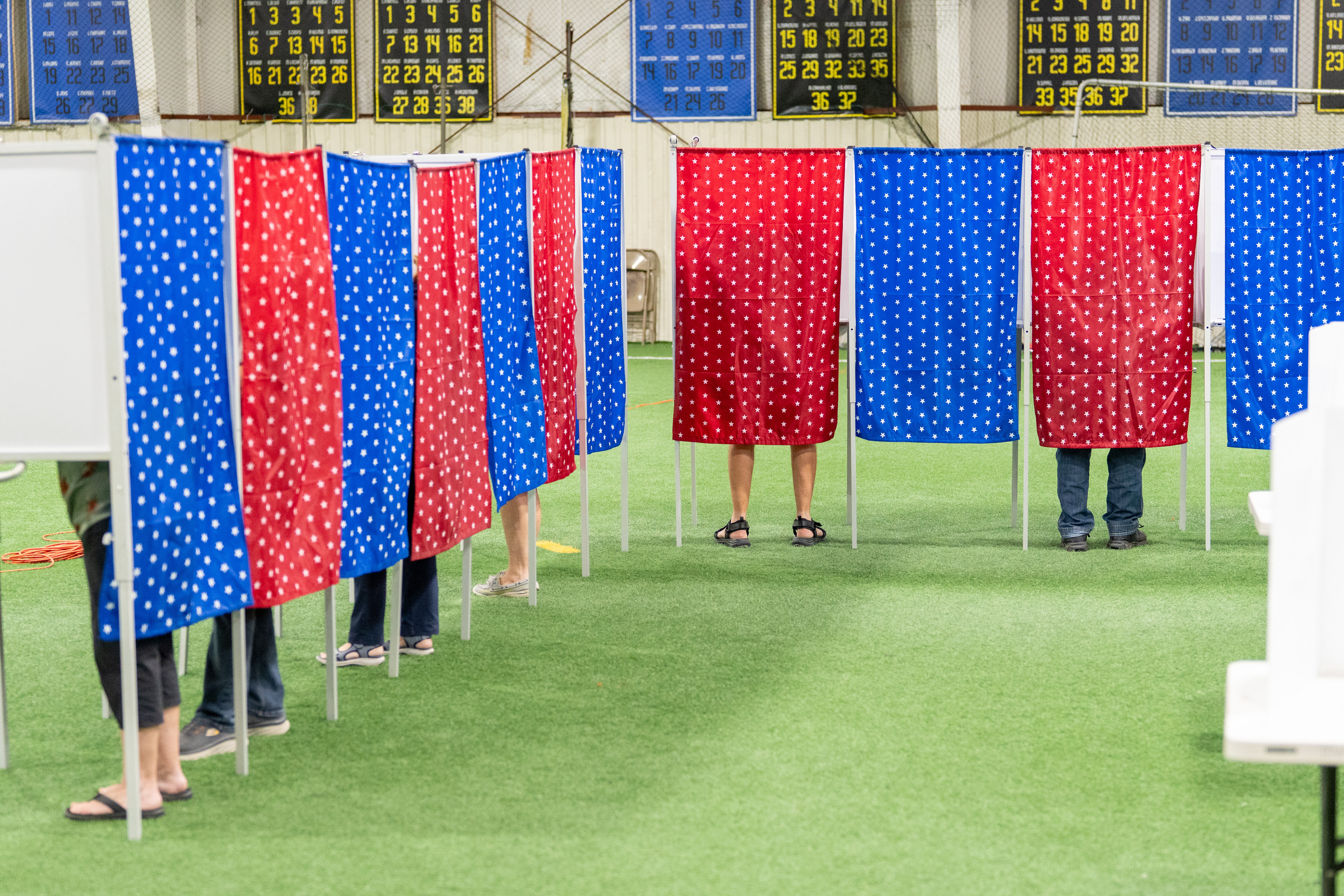 Mel Musto/Bloomberg via Getty Images Changing the threshold for success by 10 percentage points may not sound like a huge deal, but it is often the difference between a proposal becoming law and being rejected. For example, initiatives in Florida that would have legalized abortion and recreational marijuana use both received majority support from voters in 2024, but neither became law because they fell short of the state's 60% approval standard. Idaho has a measure on the ballot that would ban initiatives aimed at legalizing marijuana, psychedelics and other narcotics. If it passes, only the state legislature would have the power to legalize or decriminalize those substances. Another two states will decide on measures designed to protect the initiative process. A proposal in Montana would amend the state's constitution to guarantee citizens' rights to pursue ballot initiatives and make it harder for the government to interfere with measures approved by voters. In Missouri, voters will weigh in on a measure that would prohibit the state's Republican-led legislature from weakening the initiative process. It would also bar it from amending or repealing any measures that have passed unless 80% of both chambers agree to put the change before voters. Other notable initiativesThere are many pivotal ballot initiatives being considered across the country that don't fit neatly into a specific category. Here are a few of them. Alaska voters will decide whether to repeal their state's recently adopted ranked-choice voting system. A proposal in Arizona would ban new traffic cameras without direct voter approval. Nebraska will choose whether to legalize online sports betting. Vermont will consider a measure that would ban discrimination based on gender identity. Virginia will decide if people convicted of felonies should have their right to vote restored once they're released from prison. A measure in Wisconsin would prohibit the government from closing places of worship during public health emergencies. Massachusetts will consider whether recreational marijuana sales should once again be made illegal. A proposal on the ballot in North Dakota would require all public schools to provide free breakfast and lunch. Lower-stakes — but still noteworthy — measures under consideration include a Colorado initiative that would enshrine the right to hunt and fish in the state constitution and a request for Idaho voters to select an official state gun. This article originally appeared on Yahoo News at https://www.yahoo.com/news/politics/article/abortion-transgender-rights-and-voter-id-these-are-the-major-ballot-measures-voters-will-consider-in-the-2026-midterms-170513122.htmlmore info |
|
| ©Copyright 2018 AfterHoursIT.com. All rights reserved. |
